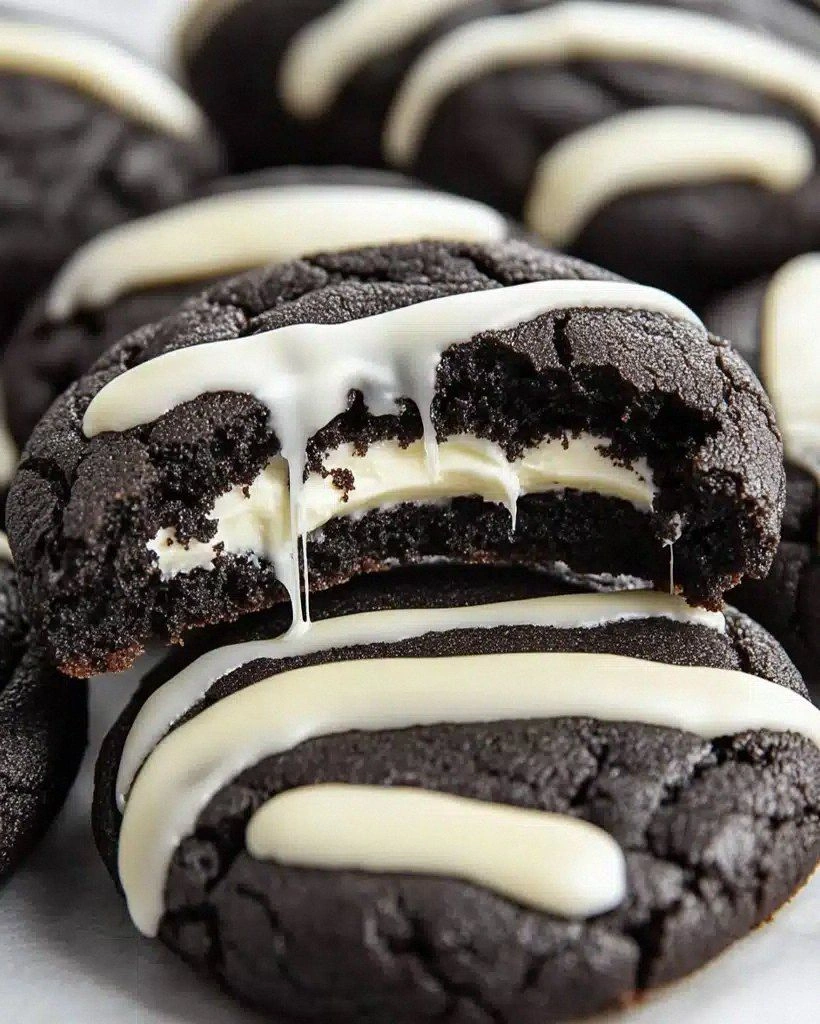
I still remember the day I ruined a perfectly good batch of chocolate cookies by trying to swirl cheesecake into them like some overenthusiastic Pinterest maniac. What emerged from my oven looked like a crime scene — streaky, deflated, and tasting like confused sugar. Fast-forward through three failed grocery runs, two existential crises, and one very patient dog who ate the evidence, and I finally cracked the code. These Black Velvet Cheesecake Cookies are the decadent love child of fudgy cocoa dough and a velvet-smooth cream-cheese core that stays molten even after cooling. One bite and you get that dramatic midnight color, the gentle resistance of a soft-baked edge, and then — boom — a cool, tangy ripple that tastes like you’re cheating on regular dessert. I dare you to taste this and not go back for seconds; I’ve seen grown adults fight over the last one like it was playoff tickets.
Picture yourself pulling this out of the oven, the whole kitchen smelling like Willy Wonka opened a speakeasy. The tops crackle like brûléed sugar, the scent is deep cocoa laced with vanilla, and if you listen closely you can hear the faintest sigh as the cheesecake centers settle. I’ll be honest — I ate half the batch before anyone else got to try it. My excuse was “quality control,” but really I was staking territorial claim like a sugar-fueled raccoon. Most recipes get this completely wrong: they either bake the cheesecake filling until it turns rubbery, or they leave it raw and gummy. Here’s what actually works — a two-temperature bake that sets the cookie while keeping the interior silky, plus a freeze-step that keeps the swirl from vanishing like a dessert Houdini.
If you’ve ever struggled with cookies that spread into sad puddles or cheesecake that cracks like desert earth, you’re not alone — and I’ve got the fix. We’re talking cocoa percentage science, butter temperature precision, and the one bowl you absolutely cannot over-mix. Stay with me here — this is worth it. Okay, ready for the game-changer? We’re using frozen cheesecake pellets that melt in slow motion, giving you that lava-cake vibe without the fuss of ganache or the anxiety of under-baked dough. By the end you’ll wonder how you ever made it any other way, and your friends will start “dropping by” whenever they see your Instagram stories.
What Makes This Version Stand Out
Flavor Depth: Dutch-process cocoa plus a whisper of espresso powder creates an almost black cookie that tastes like midnight truffle. The bitterness balances the sweet cheesecake so neither one hogs the spotlight — they dance, they flirt, they finish each other’s sentences.
Texture Contrast: Crispy sugar-crusted edges shatter like thin ice, while the interior stays fudgy and the cheesecake swirl stays cool and creamy. You get three textures in one bite, which is basically the dessert equivalent of a triple axel.
Make-Ahead Magic: The dough logs freeze like a dream; you can slice and bake straight from frozen for midnight cravings or surprise guests. Future-you is already thanking present-you, probably while wearing stretchy pants.
Pantry Friendly: No fancy bars of 72% single-origin chocolate required — just good old cocoa powder, cream cheese, and basics you already own. Quality ingredients shine, but they don’t have to cost a week’s rent.
Crowd Reaction: I’ve watched skeptics take a polite nibble, pause, then inhale the rest while making sounds that would get flagged on daytime TV. Bring these to the office and you’ll become the person people smile at in the hallway.
Foolproof Technique: Instead of hoping a swirl stays pretty, we tuck frozen cheesecake cubes into the dough like buried treasure. They melt into voluptuous pockets every single time — no artistic talent or luck required.
Alright, let’s break down exactly what goes into this masterpiece so you can taste the obsession for yourself.
Inside the Ingredient List
The Flavor Base
Dutch-process cocoa is the dark heart of these cookies; it’s been alkalized for a smoother, less acidic punch that tastes like Oreo’s sophisticated cousin. If you swap in natural cocoa the color turns reddish and the flavor becomes sharp, like a chocolate bar having an identity crisis. Espresso powder is the stealth operator — you won’t taste coffee, but it amplifies cocoa the way a subwoofer makes bass notes feel visceral. Skip it and the cookies taste perfectly fine; use it and people will ask why yours taste more “chocolatey” than theirs.
The Texture Crew
Butter must be cool-room temperature, pliable but not greasy; too soft and the dough oils out, too cold and it won’t trap air for lift. Cream cheese needs to be full-fat; low-fat versions contain stabilizers that weep water when baked, leaving sad soggy craters. Brown sugar keeps the cookie moist and adds toffee notes, while white sugar provides crisp edges — think of them as the odd couple who somehow make great roommates. An extra egg yolk acts like a built-in moisturizer, giving you that bakery-style chew without cakey fluff.
The Unexpected Star
A tablespoon of cornstarch is the ninja that tenderizes the crumb; it interferes with gluten formation so the cookie stays tender even after cooling. Black cocoa — if you can find it — pushes the color to Oreo-level darkness and adds haunting smoky notes. A tiny pinch of kosher salt on top right before baking creates tiny sparks that make the sweet and tang pop like champagne bubbles.
The Final Flourish
Pure vanilla extract is non-negotiable; imitation stuff tastes like sad birthday candles. For the cheesecake heart, a teaspoon of fresh lemon juice brightens the cream cheese and prevents it from tasting flat. If you want goth-level drama, add a drop of black gel food coloring to the dough — it won’t change the flavor but it will make your Instagram explode.
Everything’s prepped? Good. Let’s get into the real action.
The Method — Step by Step
- Beat the butter and both sugars on medium speed for a full three minutes; set a timer because two minutes feels long but three is where the sugar starts dissolving and the mixture turns pale and fluffy like coffee-shop clouds. Scrape the bowl twice — once halfway to lift any gritty sugar, once at the end to ensure no sneaky butter streaks remain. This step traps air, so your cookies rise instead of puddle. If you rush, you’ll get dense hockey pucks that double as paperweights.
- Crack in the egg and yolk, then splash in the vanilla. Beat just until the yellow disappears; over-mixing here activates proteins that turn the cookie rubbery. The dough will look like silky frosting — resist the urge to taste it, or at least use two spoons so you don’t eat half before baking. This is the moment of truth where discipline determines cookie destiny.
- Whisk the dry ingredients separately: flour, Dutch cocoa, cornstarch, espresso powder, baking soda, and salt. Whisking distributes the leavening so you don’t get one cookie that explodes like a volcano and another that lies flatter than roadkill. The mixture will be the color of midnight; don’t panic, you didn’t over-cocoa. Sift if your cocoa is lumpy, otherwise a brisk whisk works fine.
- Add the flour mix to the butter mix on low speed in three dumps. Pause as soon as the last dusty streak vanishes; finishing by hand prevents over-working. The dough will feel like thick brownie batter, sticky but scoopable. If it clings like taffy, chill ten minutes so your scoop lines stay sharp.
- Make the cheesecake filling: beat cold cream cheese with sugar, lemon juice, and vanilla until satin smooth. Do this by hand if you want an arm workout, or use a mini-processor and pulse to avoid whipping in excess air. Over-mixing here creates bubbles that burst in the oven, leaving cratered moonscapes. The mixture should be glossy and just pourable, like slightly melted ice cream.
- Using a small cookie scoop, portion the dough into heaping tablespoons. Flatten each into a rough disc, press a frozen cheesecake cube into the center, then fold the dough around and roll gently to seal. Don’t worry about perfection — the dough is forgiving and the cube will melt into a marbled heart. Place seam-down on a parchment-lined sheet two inches apart; they spread just enough to make neighbors but not merge into a super-cookie.
- Chill the shaped bombs for 20 minutes while the oven preheats to 350°F (175°C). This step resolidifies the butter so the edges set before the interior melts, giving you those Instagrammable ridges. Skip this and you’ll get puddles that taste great but look like abstract art. Use this downtime to wash the mixing bowl and pat yourself on the back.
- Bake for 11–12 minutes, rotating the sheet halfway for even color. You’re looking for matte tops with centers that still look slightly underdone — they’ll finish cooking on the hot sheet outside the oven. That sizzle when the cold cheesecake hits the pan? Absolute perfection. Over-baking dries the swirl into chalky sadness, so err on the side of gooey.
- Cool on the sheet for five minutes, then transfer to a rack. The residual heat finishes setting the centers without over-cooking the edges. If you skip this step, the bottoms sweat and turn soggy, and nobody likes a limp cookie. Once room temperature, store in an airtight tin, layered with parchment, for up to four days — though I’ve never seen them last past breakfast.
That’s it — you did it. But hold on, I’ve got a few more tricks that’ll take this to another level...
Insider Tricks for Flawless Results
The Temperature Rule Nobody Follows
Your butter should dent when pressed but not feel greasy. If the dough warms while shaping, pop the whole tray in the fridge for five minutes; cold dough equals thick cookies. Conversely, if your kitchen is arctic and the dough cracks, let it sit five minutes to soften — flexibility prevents surface fissures that leak cheesecake lava.
Why Your Nose Knows Best
When the cocoa aroma shifts from raw and dusty to rich brownie smell, cookies are thirty seconds from perfect. A friend tried skipping this step once — let’s just say it didn’t end well, and her smoke alarm now has trust issues. Set a timer, but trust your senses; ovens vary like snowflakes.
The 5-Minute Rest That Changes Everything
After mixing the dough, let it sit ten minutes so the flour hydrates and the cocoa blooms. This short nap deepens flavor and prevents that dusty aftertaste that screams box mix. Cover the bowl with a plate so it doesn’t crust over — single-use plastic wrap is so last decade.
Cheesecake Cube Consistency
Freeze the cubes until firm but not rock solid; you should be able to dent them with moderate finger pressure. Too soft and they smear into tie-dye; too hard and they refuse to melt, leaving chalky pebbles. Aim for the texture of a frozen grape — frosty, yet yielding.
Creative Twists and Variations
This recipe is a playground. Here are some of my favorite ways to switch things up:
Red Velvet Rebellion
Swap Dutch cocoa for two tablespoons natural cocoa plus a teaspoon of red gel color, and use white chocolate chunks instead of cheesecake. The color pops against the dark cocoa base, and the white chocolate melts into caramelized pockets that taste like circus nostalgia.
Salted Caramel Core
Replace cheesecake cubes with frozen caramel sauce mixed with a pinch of flaky salt. As it bakes, the caramel loosens into a river that stays fluid even when cool. Pro tip: warn guests so they don’t tilt the cookie and end up wearing caramel like a necktie.
Mint-Chocolate Midnight
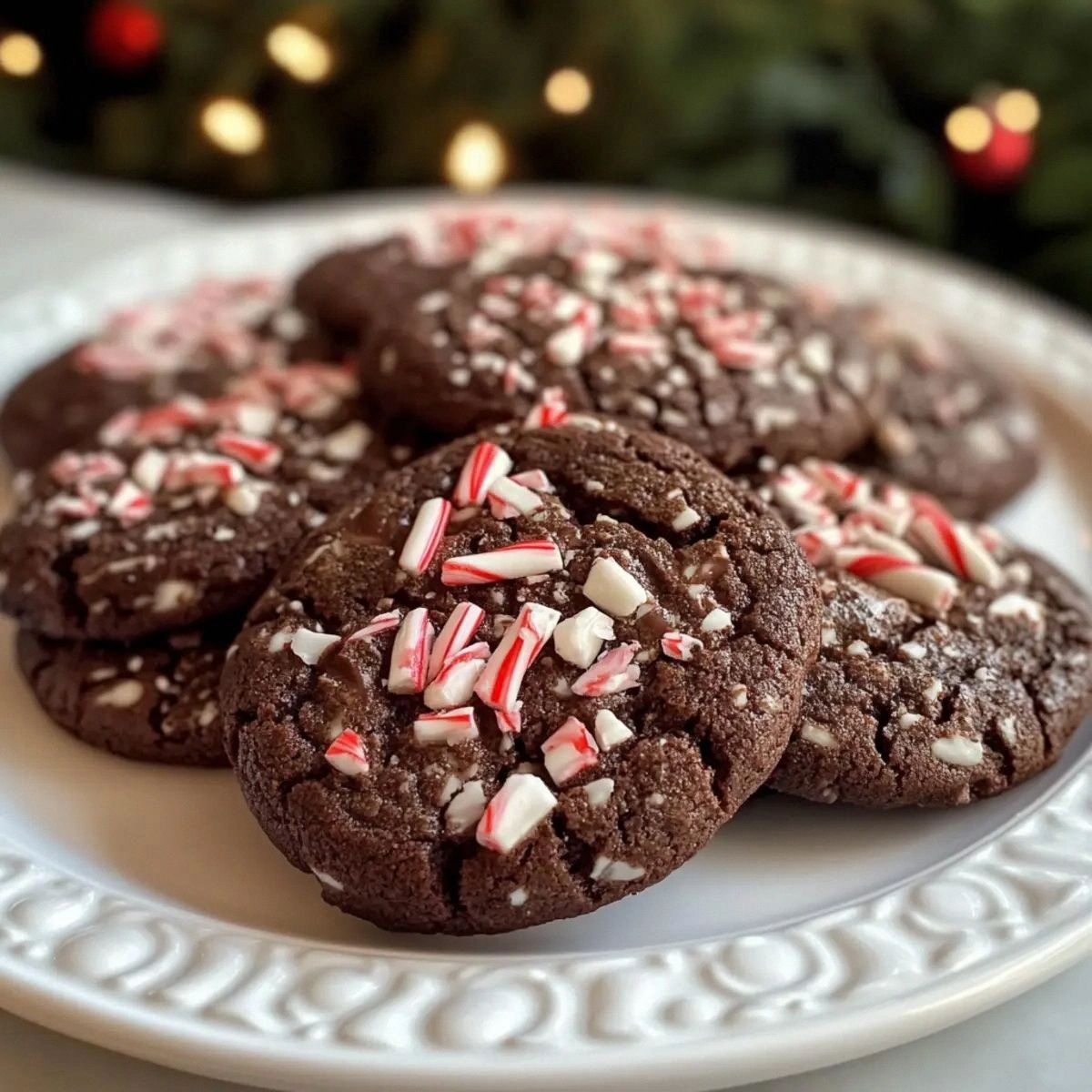
Add half a teaspoon peppermint extract to the dough and fold in mini chocolate chips. The mint cools the tongue and amplifies the dark cocoa, making the cookies taste like gourmet Thin Mints that didn’t require supporting a Girl Scout habit.
Peanut Butter Eclipse
Replace half the butter with creamy peanut butter and stuff with frozen Nutella cubes. The peanut notes complement the cocoa while Nutella provides a hazelnut hug that makes adults revert to childhood giddiness.
Spicy Mayan Mystery
Whisk a quarter teaspoon cayenne and half teaspoon cinnamon into the dry mix. The heat sneaks in at the end, warming the back of your throat and making the chocolate taste fruitier. Serve with cold milk for maximum drama.
Double-Decker Sandwich
Bake smaller cookies, then sandwich them with a layer of cheesecake frosting (cream cheese, butter, powdered sugar). Roll the edges in sprinkles for a party-ready whoopie-pie vibe that photographs like a confetti bomb.
Storing and Bringing It Back to Life
Fridge Storage
Keep baked cookies in an airtight tin at room temp for up to four days; the cheesecake center stays luscious thanks to high sugar content. If your kitchen is hot, layer parchment between cookies and refrigerate after day two to avoid cream-chease spoilage. Bring back to room temp for ten minutes before serving so the chocolate softens and the swirl regains its silky swagger.
Freezer Friendly
Shape the dough bombs, freeze solid on a sheet, then toss into a zip bag for up to three months. Bake straight from frozen, adding two extra minutes to the timer. Already-baked cookies also freeze beautifully: wrap pairs back-to-back in plastic, then bag. Thaw on the counter for fifteen minutes or microwave for eight seconds — any longer and the cheesecake turns sad and weepy like a soap opera star.
Best Reheating Method
Revive day-old cookies at 300°F (150°C) for three minutes, or microwave with a tiny mug of water alongside to create steam. The water prevents the cheesecake from turning rubbery, restoring that just-baked gooeyness. Add a scoop of vanilla ice cream while the cookie is warm and prepare to write thank-you notes to yourself.