Picture this: I’m standing in my cramped kitchen, a half‑cooked pot of rice simmering on the stove, when my roommate bursts in, eyes wide, demanding the ultimate comfort food. I swear I heard a tiny voice in my head yelling, “Make bibimbap, or forever live with regret.” The panic was real, the stakes were high, and the only thing I had was a pantry that looked like a thrift store after a hurricane. I grabbed a handful of carrots, a lonely bunch of spinach, and a mysterious jar of gochujang, and I set out on a culinary quest that felt part experiment, part dare‑devil stunt.
The first thing that hit me was the smell – a sweet, earthy perfume wafting from the sizzling pan, mingling with the nutty aroma of toasted sesame oil. It was as if a Korean street market had set up shop right on my stovetop, the clatter of pans echoing like distant drums, the steam rising like a gentle fog over a mountain village. My taste buds were already doing a little happy dance, anticipating the crunch of fresh vegetables, the umami punch of marinated beef, and that signature gochujang sauce that promises a flavor explosion louder than a fireworks show. I could almost hear the sizzle of the rice as it hits the hot pan, a sound that, to me, is the soundtrack of pure satisfaction.
Most bibimbap recipes I’ve tried either left the rice soggy, the veggies limp, or the sauce so watery it turned the whole bowl into a sad, soupy mess. I’ve seen people drown their bowls in gochujang, hoping to mask the lack of depth, and that’s where they go wrong. This version, however, is a meticulously balanced symphony where every component sings its own solo yet harmonizes perfectly with the rest. I’m talking about a bowl where the rice is fluffy yet slightly toasted, the vegetables retain a crisp‑to‑tender bite, and the sauce clings to each bite like velvet, delivering a punch that’s both sweet and fiery.
And here’s the kicker: I’m about to reveal a secret technique that most cookbooks skip – a quick flash‑fry of the rice in a hot skillet with a whisper of sesame oil before assembling the bowl. This step creates those coveted, caramelized edges that give the dish that addictive crunch you crave. Okay, ready for the game‑changer? Let me walk you through every single step — by the end, you’ll wonder how you ever made it any other way.
What Makes This Version Stand Out
- Flavor Explosion: The gochujang‑soy‑sesame glaze is balanced with just enough sugar to tame the heat, resulting in a sauce that coats each ingredient like a silky, spicy hug.
- Texture Symphony: From the toasted rice to the crisp‑tender vegetables and the runny yolk, every mouthful offers a delightful contrast that keeps you reaching for more.
- Simplicity Meets Sophistication: With only a handful of pantry staples and a few fresh veggies, you can achieve restaurant‑quality results without a culinary degree.
- Ingredient Quality: Using authentic Korean short‑grain rice and real gochujang (not the cheap, overly sweet versions) makes a world of difference in depth and authenticity.
- Crowd Reaction: I dare you to taste this and not go back for seconds – it’s the kind of bowl that sparks applause at dinner parties.
- Make‑Ahead Potential: Prep the veggies and sauce ahead of time; the final assembly takes under five minutes, perfect for busy weeknights.
- Cooking Method Magic: The flash‑fry technique for the rice creates caramelized edges that most recipes completely miss.
- Versatile Base: Whether you’re a meat lover or a vegetarian, swapping the protein is effortless, making this bowl a universal crowd‑pleaser.
Inside the Ingredient List
The Flavor Base
Short‑grain rice (2 cups): This is the heart of bibimbap, providing a sticky canvas that soaks up the sauce without turning mushy. If you skip the rinse, you’ll end up with gummy rice that feels like chewing on a rubber band. For the best texture, use a rice cooker or a heavy‑bottomed pot and let it steam undisturbed for 15 minutes after cooking.
Gochujang (2 tbsp): The Korean chili paste is the soul‑shaker of this dish, delivering heat, umami, and a subtle sweetness. Opt for a brand that lists fermented soybeans as the first ingredient – that’s the hallmark of authenticity. If you prefer a milder bowl, dilute it with a splash of water before mixing.
Sesame oil (1 tbsp): This oil adds a nutty aroma that instantly transports you to a Korean market. A drizzle over the rice right before the final assembly creates those caramelized edges that make the bowl addictive. Too much, however, can overwhelm the delicate flavors, so measure carefully.
The Texture Crew
Carrot, julienned (1 large): Carrots bring a sweet crunch that balances the spicy sauce. Slice them thinly, like matchsticks, to ensure they soften just enough during the quick stir‑fry. If you overcook, you lose that satisfying snap that makes each bite interesting.
Zucchini, julienned (1 small): Zucchini adds a subtle earthiness and a glossy sheen when sautéed with a pinch of salt. It’s best to pat them dry after slicing to avoid excess moisture that could sog the rice. A quick flash‑fry for 2 minutes keeps them bright and tender.
Shiitake mushrooms (5 pieces, sliced): These mushrooms introduce a deep, woody umami that pairs perfectly with the beef. Soak dried shiitake in warm water for 20 minutes if you can’t find fresh; the rehydrated caps are just as flavorful.
Spinach (1 cup, blanched): Spinach provides a mellow green note and a silky texture after blanching. Toss it with a dash of sesame oil and a pinch of salt for extra depth. Skipping the blanching step results in a bitter aftertaste.
Bean sprouts (1 cup): The sprouts deliver a crisp, watery crunch that cuts through the richness of the sauce. Rinse them thoroughly and pat dry; any excess water will steam the rice and ruin the toasted edges.
The Unexpected Star
Garlic, minced (2 cloves): Garlic is the quiet hero that amplifies the umami of the beef and the sauce. Crush it first to release more allicin, then sauté briefly to avoid bitterness. If you love garlic, feel free to add an extra clove – just remember it’ll dominate the flavor profile.
Soy sauce (1 tsp): A splash of soy sauce deepens the savory notes without making the dish salty. Choose a low‑sodium version if you’re watching your salt intake, and add it during the meat marination for maximum penetration.
Sugar (1 tsp): A pinch of sugar balances the heat of the gochujang, creating a harmonious sweet‑spicy dance. It also helps the sauce cling to the rice, preventing it from sliding off the bowl.
The Final Flourish
Beef (0.5 lb, thinly sliced or ground): Traditionally, ribeye or sirloin is used for its tenderness and flavor. Marinate it in soy, garlic, sugar, and a drizzle of sesame oil for at least 15 minutes to infuse it with the sauce’s depth. If you’re vegetarian, swap with tofu or tempeh – just press it well to avoid sogginess.
Eggs (2, fried sunny side up): The runny yolk acts as a golden, silky sauce that melds all the flavors together. Fry them in a non‑stick pan with a thin layer of oil, keeping the whites just set and the yolks liquid. If you’re not a fan of runny yolks, a soft‑boiled egg works just as well.
Sesame seeds (1 tsp): Toasted sesame seeds add a subtle crunch and a nutty finish that elevates the bowl from good to unforgettable. Sprinkle them generously just before serving.
Salt & pepper (to taste): Simple seasonings that bring everything into balance. Remember, the soy sauce and gochujang already carry salt, so season lightly.
Everything's prepped? Good. Let’s get into the real action…
The Method — Step by Step
Start by cooking the short‑grain rice. Rinse two cups of rice until the water runs clear, then let it soak for 30 minutes. Drain and add to a pot with 2¼ cups of water, bring to a boil, then reduce to a low simmer, cover, and cook for 15 minutes. After it’s done, remove from heat and let it sit, covered, for another 10 minutes – this is the secret to fluffy, separate grains.
While the rice cooks, prepare the gochujang sauce. In a small bowl, whisk together 2 tbsp gochujang, 1 tsp soy sauce, 1 tsp sugar, 1 tbsp sesame oil, and the minced garlic. The mixture should be smooth, glossy, and slightly thick – if it’s too thick, add a splash of water; if too runny, a pinch more gochujang will do.
Now, tackle the vegetables. Heat a large skillet over medium‑high heat, add a drizzle of oil, then quickly stir‑fry the carrots for 2 minutes until they’re just tender but still bright orange. Transfer to a plate and repeat with zucchini, shiitake mushrooms, spinach, and bean sprouts, seasoning each with a pinch of salt. The key is high heat and short cooking times – you want that crisp‑tender bite, not a wilted mush.
Time for the star protein. In a bowl, combine the thinly sliced beef with 1 tsp soy sauce, 1 tsp sugar, the remaining minced garlic, and a drizzle of sesame oil. Let it marinate while the veggies finish cooking – even 10 minutes makes a huge difference. Then, in the same hot skillet, sear the beef over high heat for about 2‑3 minutes, stirring constantly, until it’s caramelized on the edges and still pink inside.
Watch Out: Overcrowding the pan will steam the beef instead of searing it, resulting in a texture that’s more boiled than browned. If you have a lot of meat, work in batches, giving each piece room to develop that coveted crust.
While the beef rests, give the cooked rice a flash‑fry. Heat a clean non‑stick skillet over medium‑high heat, add 1 tbsp sesame oil, then spread the rice in an even layer. Let it sit undisturbed for 2 minutes so the bottom forms a golden crust, then gently flip sections to create more toasted bits. The aroma at this point is pure magic – you’ll hear a faint crackle, and the rice will smell nutty and slightly caramelized.
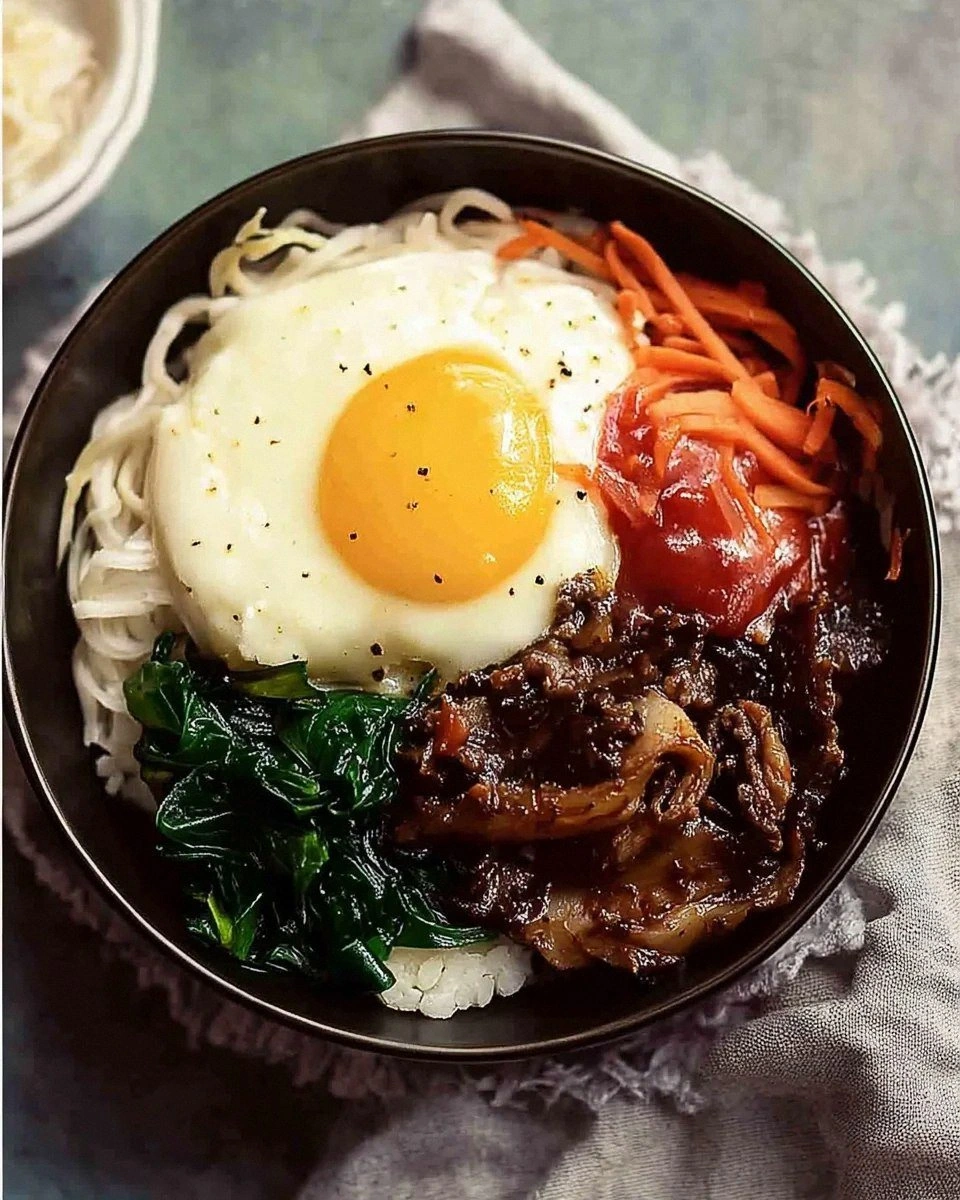
Now assemble the bowl. Place a generous mound of the toasted rice at the bottom of a wide, shallow bowl. Arrange each vegetable and the beef in separate sections around the rice, creating a colorful mandala that looks as good as it tastes. Drizzle the gochujang sauce over the top, letting it pool in the center.
Finally, top each bowl with a sunny‑side‑up egg. The moment the yolk breaks and runs into the sauce, you’ll see the flavors meld into a glossy, velvety coating. Sprinkle toasted sesame seeds over everything for that final burst of nuttiness. Serve immediately, and watch as your guests dive in, eyes wide, mouths watering.
That’s it — you did it. But hold on, I’ve got a few more tricks that'll take this to another level…
Insider Tricks for Flawless Results
The Temperature Rule Nobody Follows
Never cook the rice on low heat; you’ll never get those caramelized edges that give bibimbap its signature crunch. Crank the skillet to medium‑high, let the oil shimmer, and only then add the rice. The heat should be hot enough that you hear a gentle sizzle within the first few seconds – that’s the sound of flavor forming. I once tried a “low‑and‑slow” method and ended up with a mushy, sad bowl that tasted like soggy porridge.
Why Your Nose Knows Best
Trust the aroma. When the rice hits that perfect toasted stage, you’ll smell a nutty, slightly caramel scent that’s unmistakable. If you can’t smell it, the rice is either not hot enough or you’re over‑cooking it, which leads to bitterness. A quick sniff is a better gauge than a timer, especially when you’re juggling multiple components.
The 5‑Minute Rest That Changes Everything
After searing the beef, let it rest for at least five minutes before slicing. This short pause lets the juices redistribute, preventing a dry, over‑cooked bite. I once cut into the meat immediately and watched the juices run straight into the rice, making it soggy. Resting is the silent hero that keeps each bite juicy and flavorful.
Egg Perfection Every Time
For that picture‑perfect runny yolk, fry the egg on low heat and cover the pan for the last 30 seconds. The steam will set the whites without overcooking the yolk. If you prefer a firmer yolk, increase the heat slightly and flip the egg after 45 seconds – just don’t overdo it, or you’ll lose the sauce‑binding magic.
Seasoning the Veggies Like a Pro
Each vegetable deserves a light seasoning of salt and a drizzle of sesame oil right after it hits the pan. This not only enhances its natural flavor but also creates a subtle sheen that makes the bowl look restaurant‑ready. Skipping this step leaves the veggies tasting flat, and the bowl loses that cohesive, glossy finish.
Creative Twists and Variations
This recipe is a playground. Here are some of my favorite ways to switch things up:
Spicy Kimchi Kick
Swap half the gochujang sauce for well‑drained, chopped kimchi. The fermented tang adds depth and a pleasant fizz that cuts through the richness of the beef. Kimchi lovers will thank you for the extra crunch and probiotic boost.
Vegan Delight
Replace the beef with marinated tofu cubes or tempeh strips, and use a mushroom‑based broth in the sauce. Add a handful of roasted seaweed strips for a salty umami punch. The result is a plant‑based bowl that still delivers the classic texture contrast.
Seafood Sensation
Use thinly sliced salmon or shrimp instead of beef. Marinate the seafood in a mixture of soy, garlic, and a dash of lemon juice for 10 minutes, then quickly sear. The delicate flavor of the seafood pairs beautifully with the sweet‑spicy sauce.
Cheesy Fusion
Stir in a spoonful of melted mozzarella or a crumble of feta just before serving. The cheese adds a creamy layer that mellows the heat, creating a comforting, indulgent twist that’s perfect for chilly evenings.
Grain‑Swap Adventure
Swap the rice for quinoa, farro, or even cauliflower rice for a low‑carb version. Each grain brings its own texture – quinoa adds a nutty bite, farro offers chewiness, and cauliflower rice keeps the bowl light while still absorbing the sauce.
Sweet & Savory Fusion
Top the bowl with thinly sliced mango or pineapple for a burst of tropical sweetness that balances the heat. A drizzle of honey or maple syrup can also elevate the flavor profile, turning the dish into a sweet‑spicy masterpiece.
Storing and Bringing It Back to Life
Fridge Storage
Separate the components into airtight containers – rice, sauce, vegetables, and protein each get their own space. Store for up to three days. When you’re ready to eat, reheat the rice and protein in a hot skillet with a splash of water, then assemble with fresh veggies and a fresh egg if desired.
Freezer Friendly
The cooked rice and marinated beef freeze beautifully. Portion into freezer‑safe bags, label, and store for up to two months. Thaw overnight in the fridge, then reheat in a skillet; the veggies are best fresh, but you can also flash‑freeze them for later use.
Best Reheating Method
To revive the toasted rice, heat a non‑stick pan over medium‑high, add a drizzle of sesame oil, and toss the rice for 2‑3 minutes until it regains its crunch. Add a tiny splash of water (about a tablespoon) before covering the pan for a minute – the steam brings the rice back to life without making it soggy.