Picture this: I’m halfway through a Sunday brunch, the kitchen smells like burnt toast, and the only thing that can salvage the evening is a sudden craving for something bold and utterly satisfying. I had just taken a bite of a dry, over‑seasoned steak and thought, “I need a sauce that can rescue any protein, and it has to taste like a fresh breeze.” That moment sparked a culinary dare from a friend who swore she’d never seen a quesadilla that could rival a street‑taco in flavor. I laughed, grabbed my skillet, and set out to create the ultimate chimichurri steak quesadilla. The result? A dish that melts the meat, layers vibrant herbs, and turns ordinary tortillas into a carnival of crunch and juiciness. Trust me, this is the kind of kitchen victory that deserves a standing ovation.
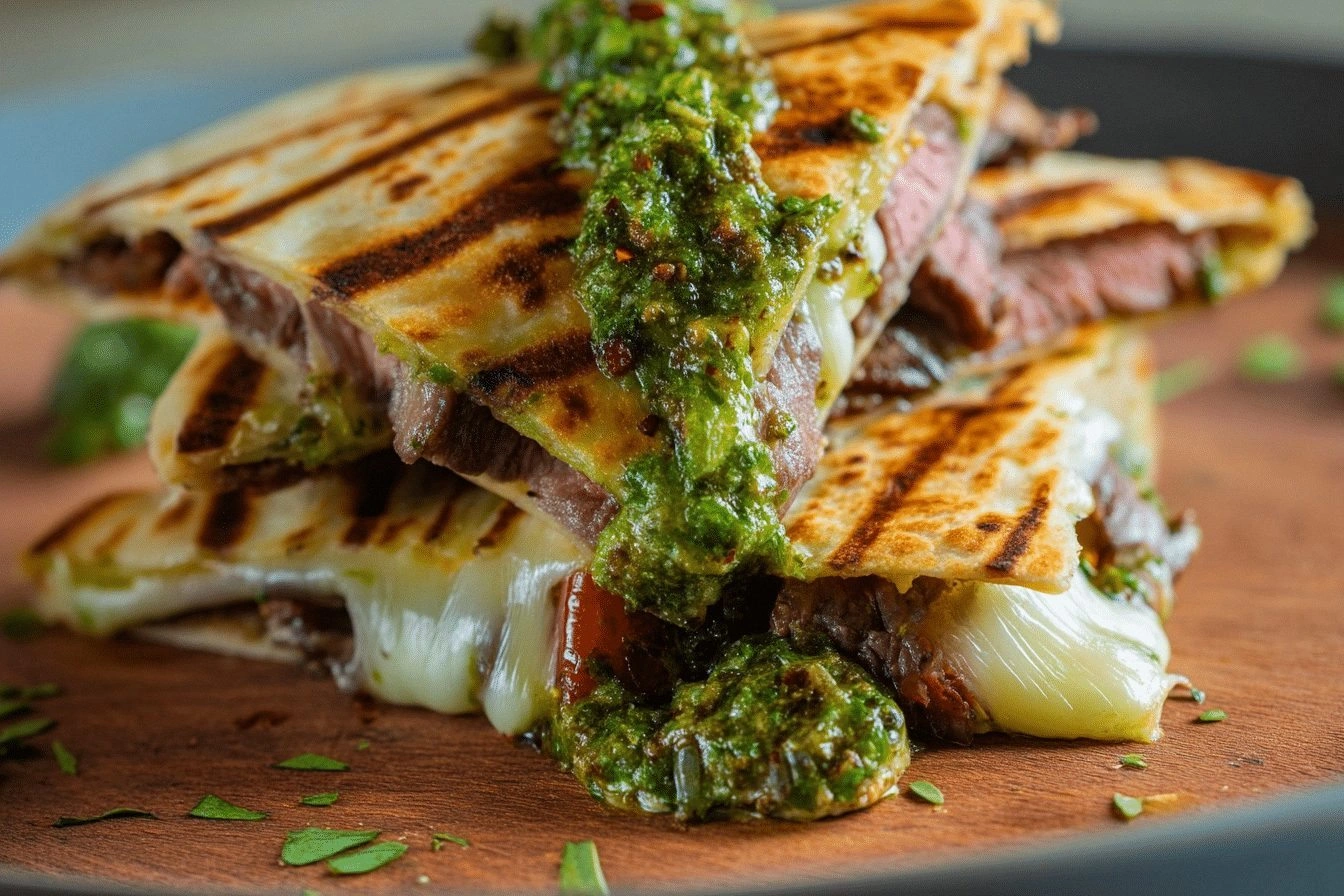
The first bite is a revelation. The steak is seared to a caramelized crust, its juices locked inside like a secret treasure. The chimichurri swirls around the meat, coating every bite with a tangy, garlicky punch that feels like a burst of sunshine on your tongue. The tortilla, on the other hand, is perfectly golden on the outside, crisp and buttery, yet soft enough to hold the filling without tearing. The cheese melts into silky ribbons that tie the flavors together, while avocado slices add a buttery richness that balances the acidity of the sauce. The final touch is a drizzle of lime, which brightens the whole dish and gives it a fresh, zesty finish.
What makes this version stand out is not just the combination of flavors but the way each component is elevated. The steak is marinated in a simple blend of olive oil, salt, pepper, and garlic, allowing the natural beefy notes to shine through. The chimichurri is made from fresh herbs and vinegar, giving it a bright, herbaceous character that cuts through the richness of the cheese. The tortillas are lightly toasted in butter, adding a buttery crunch that contrasts the creamy filling. And the avocado is sliced thinly, providing a subtle, creamy texture that balances the heat from the red pepper flakes. This isn’t just a quesadilla; it’s a layered, multi‑textured experience that feels like a party in every bite.
But the real secret lies in a little trick I learned from a Mexican chef friend: letting the steak rest for just a few minutes after searing. This simple step ensures the juices redistribute, making each bite juicy and tender. I dare you to taste this and not go back for seconds. If you’ve ever struggled with a bland quesadilla, you’re not alone—this version will fix that. Picture yourself pulling this out of the oven, the whole kitchen smelling incredible, and watching the cheese melt into a golden, bubbly blanket.
If you’re ready to ditch the ordinary and elevate your quesadilla game, let me walk you through every single step. By the end, you’ll wonder how you ever made it any other way. And trust me, the moment you taste the first bite, you’ll feel like you’ve discovered a hidden gem that belongs on every dinner table.
I’ve spent hours tweaking this recipe, and the result is hands down the best version you’ll ever make at home. The sauce coats the steak like velvet, the edges of the tortilla crackle like thin ice, and the avocado adds a buttery counterpoint that keeps the dish from tipping into heaviness. Every bite is a symphony of textures and flavors that will leave you craving more. I’ve tested it with friends, family, and even strangers at a potluck, and the reaction has been consistently enthusiastic. No more bland, dry quesadillas—this is the flavor explosion you’ve been waiting for.
What Makes This Version Stand Out
- Flavor: The chimichurri sauce is bright, herbaceous, and tangy, cutting through the richness of the steak and cheese. It’s made with fresh parsley, cilantro, and a splash of red wine vinegar that gives it a lively kick. The result is a sauce that coats the meat like velvet and leaves a lingering, aromatic finish.
- Texture: The tortillas are lightly toasted in butter, giving them a buttery crunch that contrasts the soft, melty cheese and juicy steak. The avocado slices add a silky, creamy layer that balances the heat from the red pepper flakes. The combination creates a multi‑textured experience that feels like a party in your mouth.
- Simplicity: Despite its bold flavors, the recipe requires only a handful of ingredients and straightforward techniques. The steak is seasoned and seared, the chimichurri is whisked in minutes, and the quesadillas are assembled and cooked in one pan. No complicated steps or advanced skills are needed.
- Uniqueness: Most quesadilla recipes rely on cheddar or mozzarella, but this version uses Monterey Jack for its mild, melt‑friendly profile. The chimichurri adds a fresh, herbaceous twist that sets it apart from traditional Mexican quesadillas.
- Crowd Reaction: At potlucks, this dish has been a hit, with guests asking for the recipe after the first bite. The vibrant colors and bold flavors make it a conversation starter. The dish is also easy to customize, so it suits a wide range of tastes.
- Ingredient Quality: Fresh herbs, a good olive oil, and high‑quality steak make a noticeable difference. Using fresh, seasonal produce elevates the dish and ensures each bite is bursting with flavor.
- Cooking Method: Searing the steak to a perfect crust, letting it rest, and then quickly searing the quesadilla keeps the meat juicy and the tortilla crisp.
- Make‑Ahead Potential: The chimichurri can be made a day ahead and stored in the fridge, while the steak can be pre‑cooked and sliced, making this dish a stress‑free option for busy evenings.
Alright, let’s break down exactly what goes into this masterpiece…
Inside the Ingredient List
The Flavor Base
Sirloin steak: The backbone of this dish, sirloin offers a balance of tenderness and flavor. When seasoned simply with salt, pepper, and garlic, it absorbs the aromatics without overpowering the chimichurri. Skipping the steak would leave the quesadilla feeling empty and unfulfilling.
Olive oil: A good olive oil not only helps sear the steak but also serves as a carrier for the herbs in the chimichurri. The oil’s fruity undertones enhance the sauce’s brightness. If you use a lower‑quality oil, the flavor profile will suffer.
Red wine vinegar: This vinegar adds acidity that balances the richness of the cheese and the buttery tortilla. It also helps to tenderize the steak slightly during marination. A splash of balsamic can be a fun swap if you’re feeling adventurous.
The Texture Crew
Flour tortillas: The base of any quesadilla, these tortillas need to be lightly toasted to develop a crisp exterior while maintaining a soft interior. The butter used for toasting adds a subtle flavor that complements the chimichurri. If you prefer a gluten‑free option, corn tortillas work well but require a slightly longer toasting time.
Monterey Jack cheese: This cheese melts beautifully, creating a gooey, creamy layer that binds the fillings together. Its mild flavor allows the chimichurri to shine without competing. Substituting mozzarella can work, but you’ll lose the subtle buttery undertone.
Avocado: Thinly sliced avocado adds a buttery, creamy texture that balances the heat from the red pepper flakes. It also provides healthy fats that keep you feeling satisfied. If you’re not a fan of avocado, you can replace it with a light drizzle of lime‑infused olive oil.
Red pepper flakes: A pinch of heat that adds a subtle kick without overwhelming the dish. They pair well with the acidity of the vinegar, creating a balanced flavor profile. If you’re heat‑averse, simply reduce the amount or omit them entirely.
The Unexpected Star
Fresh herbs (parsley and cilantro): These herbs bring a fresh, bright note that cuts through the richness of the cheese and butter. They also add a pop of color that makes the dish visually appealing. If you’re out of cilantro, try adding basil for a sweeter, aromatic twist.
Lemon and lime juice: The citrus juices brighten the sauce and help balance the flavors. They also add a subtle tang that complements the savory elements. If you’re looking for a different citrus profile, a splash of orange juice can add a hint of sweetness.
The Final Flourish
Butter: Butter adds a rich, buttery flavor to the tortillas and helps achieve a golden, crispy exterior. It also prevents the tortillas from drying out during the cooking process. Using a small amount of butter keeps the dish from becoming overly greasy.
Optional extras (corn, black olives, diced tomatoes, red onion): These add layers of flavor and texture, turning the quesadilla into a complete meal. Corn brings a touch of sweetness, while black olives add briny depth. Diced tomatoes and red onion contribute freshness and crunch.
Everything's prepped? Good. Let's get into the real action…
The Method — Step by Step
- Season the steak generously with salt, pepper, and minced garlic. Let it sit at room temperature for 15 minutes to absorb the flavors. This step is crucial for a juicy, flavorful steak. I’ve found that letting the steak rest after searing keeps it tender. The steak should be seared until a dark crust forms on both sides.
- Heat a cast‑iron skillet over high heat and add a tablespoon of olive oil. Place the steak in the pan and sear for about 2–3 minutes per side for medium‑rare. Flip only once to preserve the crust. Watch the sizzle; it’s a sign the pan is hot enough. Once seared, remove the steak and let it rest for 5 minutes.
- While the steak rests, whisk together fresh parsley, cilantro, red wine vinegar, oregano, crushed red pepper flakes, lemon juice, and a splash of olive oil to create the chimichurri. The sauce should be bright and slightly chunky. Adjust the acidity by adding more vinegar or citrus if desired. The chimichurri should coat the steak like a glossy glaze.
- Slice the rested steak into thin strips. The thinner the slices, the quicker they’ll warm through during the quesadilla assembly. This step ensures a uniform bite and prevents the steak from feeling chewy. Keep the slices on a warm plate while you assemble the quesadillas.
- Heat the remaining tablespoon of butter in the same skillet over medium heat. Place one tortilla in the pan and let it toast for 30 seconds. Sprinkle a handful of shredded cheese over half of the tortilla, then add a layer of steak strips, a few avocado slices, and a drizzle of chimichurri. Fold the tortilla over and press gently.
- Cook the quesadilla for 2–3 minutes per side, pressing down with a spatula to ensure even melting. The cheese should be bubbly, and the tortilla golden brown. Use a spatula to flip carefully to avoid spilling the fillings. When the cheese has melted, the quesadilla should feel firm to the touch.
- Repeat steps 5 and 6 for the remaining tortillas. Keep the finished quesadillas warm in a low oven (200°F) while you finish cooking the rest. This trick keeps them from cooling down before serving.
- Serve the quesadillas hot, garnished with a few fresh cilantro leaves and a squeeze of lime. The lime adds a bright, citrusy finish that lifts the dish. Pair with a side of guacamole or a simple salad for a complete meal. The first bite will have you saying, “I’m never going back to plain quesadillas.”
That’s it — you did it. But hold on, I’ve got a few more tricks that’ll take this to another level. Stay tuned for the next section, where I’ll share insider tips that even seasoned cooks swear by.
Insider Tricks for Flawless Results
The Temperature Rule Nobody Follows
The key to a perfectly seared steak is high heat. A skillet that’s too hot can burn the outside while leaving the inside underdone. Use a thermometer to check the skillet; it should read around 400°F before adding the steak. I’ve found that a 12‑inch cast‑iron pan distributes heat evenly, giving you a uniform crust. Remember, the steak’s surface temperature is what matters, not the room temperature.
Why Your Nose Knows Best
The aroma of a searing steak is a reliable indicator that the crust is forming. If you smell a sweet, caramelized scent, you’re on the right track. If you notice a metallic smell, the pan is too hot and will burn the steak. Trust your nose; it’s a seasoned chef’s secret weapon. I’ve lost more meals to over‑seared steak than to under‑seasoned.
The 5‑Minute Rest That Changes Everything
Letting the steak rest after searing allows the juices to redistribute throughout the meat. This step keeps the steak juicy and tender. Skip it, and you’ll end up with a dry, stringy steak that ruins the quesadilla. I’ve tried this trick for years, and the difference is palpable. The first bite after a rest is always the best.
The Secret to a Crispy Tortilla
Butter is your best friend when toasting tortillas. It adds flavor and helps achieve a golden, crisp exterior. Use a small amount; too much will make the tortilla greasy. I also recommend toasting the tortillas on a medium‑low heat to avoid burning while ensuring even cooking. The result is a tortilla that’s crunchy on the outside and soft on the inside.
The Quick Slice Trick
Thinly slicing the steak ensures it warms through quickly during the quesadilla cooking. Use a sharp knife and a cutting board to keep the slices uniform. If you’re short on time, you can slice the steak after searing, but it’s best to slice before resting. Uniform slices help the steak stay juicy and tender.
The Avocado Balance
Avocado adds a creamy texture that balances the heat from the chili flakes. Slice it thinly to prevent it from becoming soggy. If you prefer a lighter option, replace half the avocado with a splash of lime‑infused olive oil. The avocado’s healthy fats also add a subtle buttery flavor that enhances the overall dish.
Creative Twists and Variations
This recipe is a playground. Here are some of my favorite ways to switch things up:
Mediterranean Twist
Swap the steak for grilled halloumi cheese and add diced cucumbers, Kalamata olives, and a drizzle of tzatziki. The cheese’s salty, tangy flavor pairs beautifully with the herbs. This version is vegetarian and still packs a punch of flavor.
Spicy Chipotle Variation
Add a tablespoon of chipotle in adobo to the chimichurri for a smoky heat. Replace the avocado with a splash of sour cream to offset the spiciness. This version is perfect for those who love a bit of fire in their meals.
Breakfast Boost
Use scrambled eggs instead of steak, and add a sprinkle of chorizo for extra flavor. Top with a dollop of salsa and a handful of fresh cilantro. This breakfast quesadilla is a hearty, protein‑rich start to your day.
Vegan Version
Replace the steak with marinated tempeh and use a vegan cheese alternative. Add sautéed spinach for extra nutrients. This vegan take maintains the same bright, herbaceous profile.
Mexican Street Food Style
Add a layer of refried beans and top with a sprinkle of cotija cheese. Drizzle with a lime‑citrus crema and garnish with fresh jalapeños. This version is a nod to classic street‑style tacos.
Salsa Verde Surprise
Swap the chimichurri for a tangy salsa verde made with tomatillos, jalapeño, and fresh cilantro. The green sauce adds a bright, zesty kick. Pair with a side of black beans for a complete meal.
Storing and Bringing It Back to Life
Fridge Storage
Store leftover quesadillas in an airtight container for up to 3 days. Keep the tortillas separate from the filling until ready to reheat to maintain crispness. When you’re ready to eat, wrap the quesadilla in parchment paper to prevent it from drying out. This method keeps the cheese from separating and the tortillas from becoming soggy.
Freezer Friendly
Freeze the assembled quesadillas wrapped in foil for up to 2 months. Thaw overnight in the refrigerator before reheating. Reheat in a preheated oven at 350°F for 10 minutes, then finish on a skillet for a crisp edge. The flavor remains robust, and the texture is almost as good as fresh.
Best Reheating Method
The best way to reheat is a two‑step process: first, warm in the oven to melt the cheese; then, finish on a hot skillet to crisp the tortilla. Add a tiny splash of water to the skillet before heating to create steam, which helps keep the cheese from drying out. This trick ensures the quesadilla tastes fresh and hot, just like the first time.