I still remember the first time I attempted beef stew. It was a Sunday that smelled like wet wool and disappointment. I’d thrown everything into my dented Dutch oven—chunks of beef that looked more like shoe leather, potatoes that dissolved into cloudy mush, and a bay leaf I later discovered stuck to the bottom like a lonely green raft. Four hours later, the stew tasted of brown nothingness. My housemate took one polite spoonful, patted my shoulder, and ordered pizza. I ate the rest of the pot over the sink, cursing every chewy cube. Fast-forward three years, hundreds of tests, and one life-changing detour through a Parisian bistro kitchen, and I finally cracked the code. The version I’m about to hand you isn’t just “good for a Tuesday.” It’s the stew that made my firefighter neighbor bang on my door at midnight, bowl in hand, begging for the recipe. It’s the stew that converted my vegetable-phobic nephew into a carrot fiend. One pot, zero babysitting, layers of flavor so deep you’ll swear the broth has a PhD in comfort.
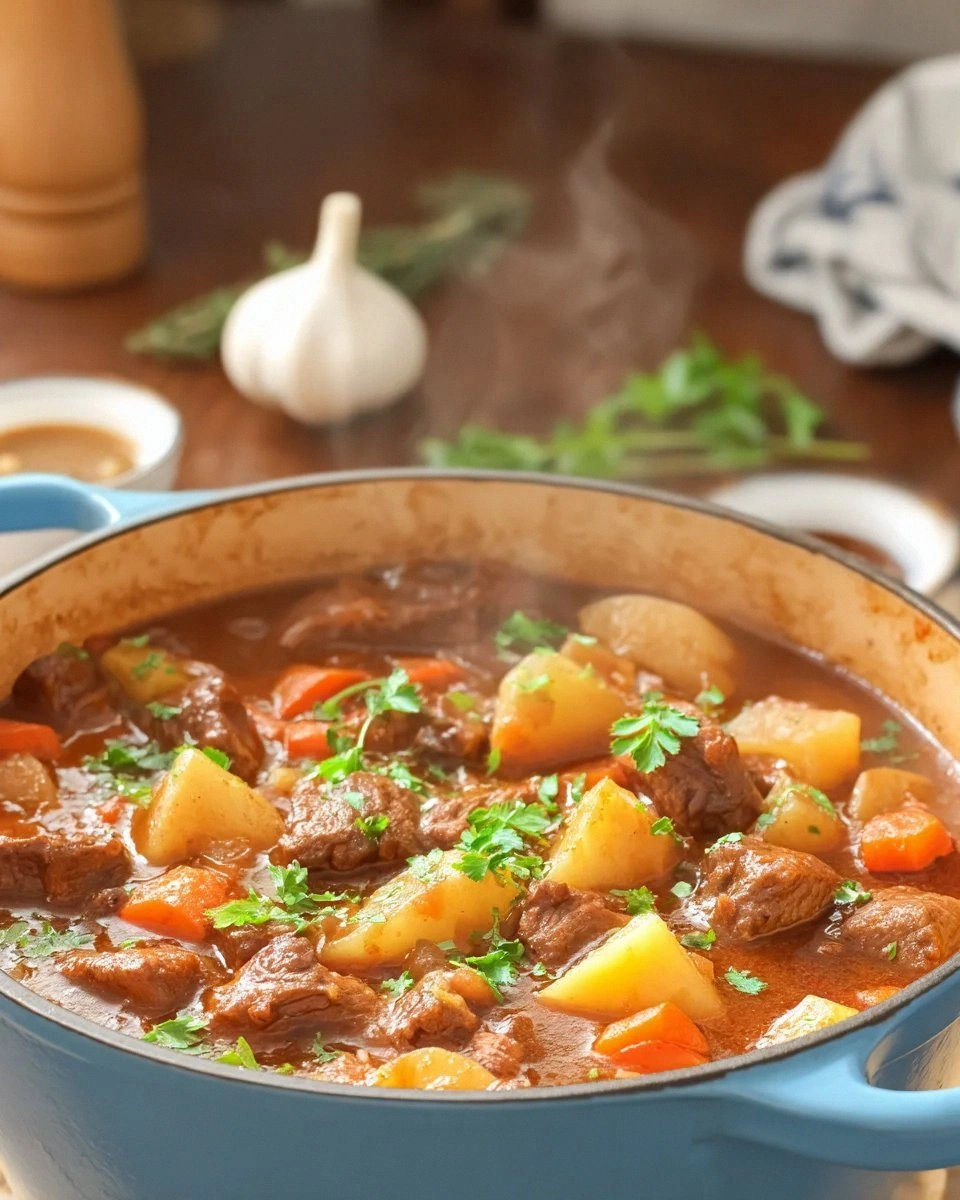
Picture this: beef so tender it surrenders at the nudge of your spoon, bathing in a glossy gravy that tastes like burgundy-kissed mushrooms and long conversations. Chunks of potato that arrive intact but creamy inside, carrots blushing sunset-orange, and a whiff of rosemary that drifts through the house like a well-timed love letter. The method is dead simple—sear, sauté, simmer—but the alchemy happens when you stop fighting the clock and start coaxing flavor instead of bullying it. I’m talking about a low, lazy bubble that turns collagen into silk, a whisper of tomato paste that melts into mahogany, and a final splash of fish sauce that you’ll never detect but would miss like a heartbeat if it were gone.
Okay, ready for the game-changer? We’re going to roast the beef bones right on top of the stew for the first twenty minutes. Sounds bonkers, but the sizzling marrow drips straight into the pot, gifting you an umami jackpot no store-bought stock can touch. Stay with me here—this is worth it. You’ll also meet my secret trio: porcini powder (cheap, shelf-stable, mushroom steroids), a single anchovy that dissolves into meaty mystique, and a whisper of orange zest that makes every other flavor sing in perfect pitch. I dare you to taste this and not go back for thirds.
Let me walk you through every single step—by the end, you’ll wonder how you ever made it any other way.
What Makes This Version Stand Out
Velvet Beef: Instead of tough little nuggets, we’re creating spoon-soft chunks by harnessing the power of a gentle, two-hour simmer and a pre-sear so aggressive it sets off smoke alarms. The result is protein that shreds into fibers like a slow-cooked pot roast, but in half the time.
Marrow-Boosted Broth: Most recipes rely on boxed stock and pray. We park roasted bones above the stew for twenty minutes, letting the fat drip and perfume the gravy with primal richness. Remove the bones, keep the jackpot.
Umami Trinity: Tomato paste cooked until it turns brick-red, porcini powder for forest-floor depth, and one stealth anchovy that disappears but leaves behind a bass note you’ll chase forever. Together they read as “old-school grandmother magic” even though your vegan friends won’t identify a single one.
One-Pot Laziness: No straining, no transferring, no mountain of dishes. Everything—sear, sauté, simmer, serve—lives in the same enamel pot. Less cleanup means more time to binge your crime documentary while the stove does the heavy lifting.
Weekend or Wednesday: Make it ahead and it improves like a good breakup story. Monday’s lunch tastes deeper and rounder than Sunday’s dinner, and it reheats in the time it takes to pour a glass of wine.
Crowd Shock Factor: Bring this to potluck and watch people ladle seconds before touching the lasagna. Someone always whispers, “You bought this from a restaurant, right?” Take the compliment, shrug modestly, and try not to gloat.
Healthier Without Trying: Loads of veg, zero heavy cream, and fat we can skim after chilling. You’ll feel nourished, not bullied by a brick of butter. Even my salad-obsessed sister calls it “clean comfort,” high praise from someone who thinks bacon is a personality trait.
Inside the Ingredient List
The Flavor Base
Beef chuck is non-negotiable. Yes, you could use round or brisket, but chuck marbles collagen and fat in perfect proportion, melting into spoon-soft threads after a lazy simmer. Buy it in one thick roast so you can cube it yourself; pre-cut “stew meat” is a grab bag of odds and ends that cook unevenly. Aim for one-and-a-half-inch chunks—any smaller and they’ll dry out, any larger and you’ll need a steak knife. Pat them bone-dry; water is the enemy of the mahogany crust we’re chasing.
Onions, carrots, and celery form the classic mirepoix, but we’re going to cheat the ratios: extra carrots for sweetness, less celery to avoid the dreaded “wet lawn” note. Dice small so they melt into the sauce, becoming invisible nutrition boosters for picky offspring. Garlic gets smashed, not minced, because burnt specks taste acrid; big pieces perfume and disappear into the gravy. Tomato paste is your caramelized sugar bomb—cook it until it turns brick-red and clings like preschool glue.
The Texture Crew
Potatoes need to hold their shape yet soak up gravy like edible sponges. Yukon Golds hit that sweet spot; russets dissolve and reds stay waxy but don’t absorb flavor. Par-cook them in the microwave for three minutes while the beef sears—this jump-starts starch gelatinization so they finish at the same time as the meat. Mushrooms add chew; creminies are cheap and meaty, but a handful of rehydrated porcini plus their soaking liquid tastes like you foraged in an Italian forest. Don’t crowd the pan when browning fungi; they’ll steam and turn rubbery. Give each slice its own personal space like a moody teenager.
The Unexpected Star
Orange zest brightens without screaming “citrus.” Use a microplane and take only the colored oil—white pith brings bitter baggage. One anchovy fillet melts into pure savoriness; vegetarians can sub Worcestershire or miso, but the fish version is stealthier. Porcini powder is my favorite weeknight cheat: a teaspoon equals a twenty-minute deglaze with expensive demi-glace. Keep it in the freezer; oils stay potent for a year. Finally, a bay leaf—yes, Grandma cliché, but toast it in the dry pot for thirty seconds and you’ll understand why this relic endures.
The Final Flourish
Fresh parsley at the end wakes everything up with chlorophyll snap. A splash of balsamic right before serving boosts sweetness and acidity in one move. If you’re feeling fancy, whip up quick gremolata: minced parsley, lemon zest, and garlic the size of confetti. Sprinkle over each bowl and watch people lose their minds over brightness they can’t name. And please, taste for salt after the stew rests; flavors concentrate as steam escapes, and yesterday’s perfect can become today’s salt lick.
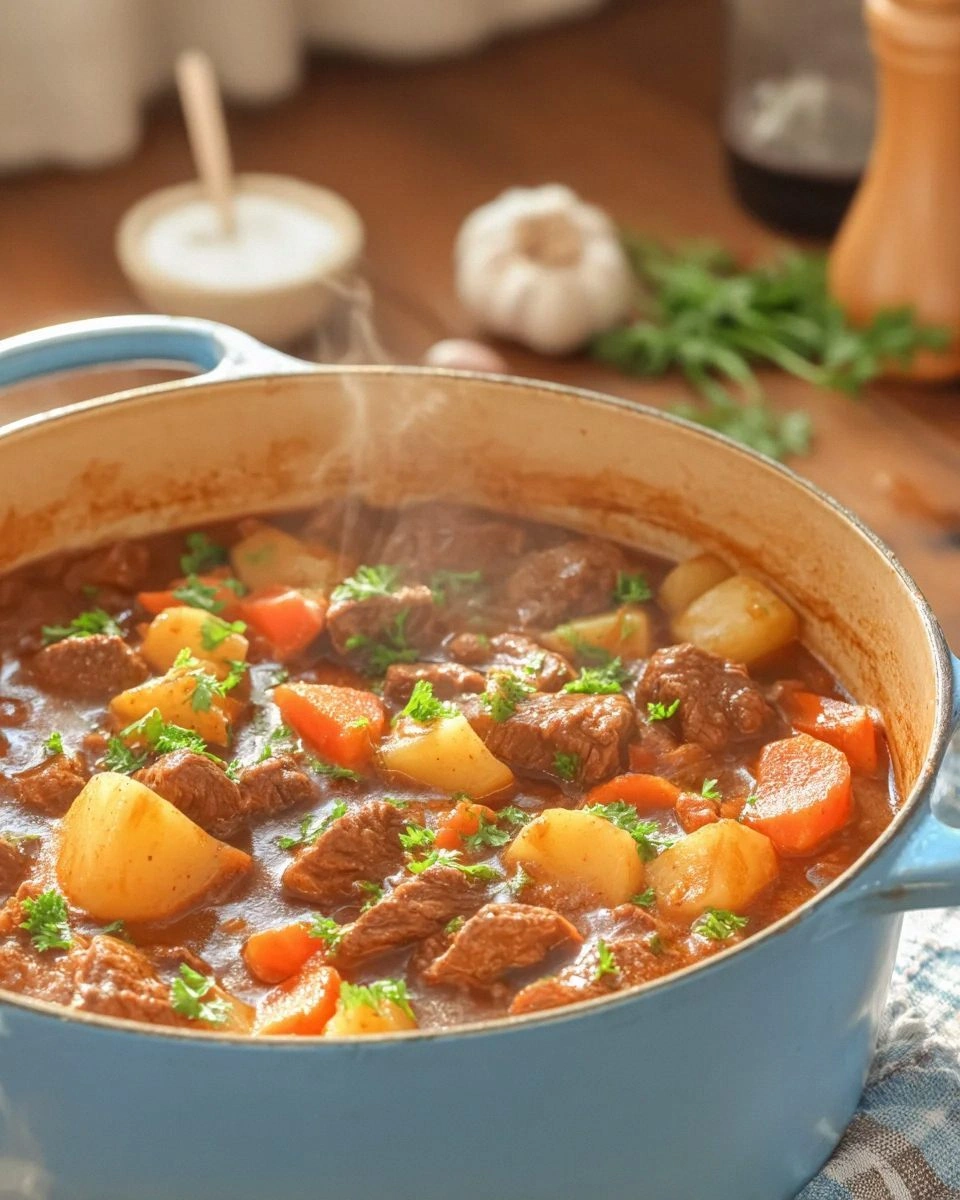
The Method — Step by Step
- Preheat your oven to 325°F (160°C). Place your Dutch oven over medium-high heat and add just enough oil to film the bottom. When the shimmer turns into frantic tiny ripples, lay half the beef cubes in a single, uncrowded layer. The sizzle should sound like applause—if you don’t hear it, pull them back out and wait. Sear until each cube releases without tearing and the underside sports a crust the color of antique mahogany, about three minutes per side. Transfer to a plate; repeat with remaining beef. This is the flavor foundation, so don’t rush it. That brown stuff glued to the pan? Liquid gold, stay tuned.
- Reduce heat to medium and toss in diced onions with a pinch of salt. Scrape the browned bits as the onions sweat; the moisture plus a sturdy wooden spoon will deglaze for free. When the onions turn translucent and the bottom of the pot looks almost clean, add carrots and celery. Cook until the carrots start to caramelize on the edges and the kitchen smells like Sunday at Grandma’s—about six minutes. Clear a hot spot in the center, blob in the tomato paste, and stir until it darkens two shades and smells sweet, not raw, another two minutes. Think of it as making a roux with vegetables; color equals complexity.
- Stir in the minced garlic for thirty seconds, just until you can smell it, then sprinkle the flour evenly over the veg. Cook, stirring, for a full minute to remove the raw taste and coat everything in a light, nutty film. This small amount of flour thickens the broth just enough to nap the back of a spoon without turning into library paste. Pour in a splash of wine—red, preferably something you’d drink. It will hiss and steam, lifting every bit of fond into the mix. Let the alcohol burn off until the pot smells fruity, not boozy.
- Return the beef and any juices to the pot. Add potatoes, mushrooms, porcini soaking liquid (strained through coffee filter to avoid grit), stock, Worcestershire, anchovy, porcini powder, orange zest, thyme, bay leaf, and pepper. The liquid should barely submerge the goodies; add water or more stock if needed. Bring to a gentle simmer on the stovetop; you want lazy lava bubbles, not a rolling boil. Cover with a tight lid, slide into the oven, and walk away for ninety minutes. This is where collagen converts to gelatin and the broth turns glossy. Set a timer, pour yourself something nice, and relish the aroma that soon smells like edible flannel.
- While the stew braises, place beef bones on a small foil-lined tray, drizzle with oil, and season with salt. Slide them into the oven above the stew for twenty minutes. The marrow will soften and the fat will sizzle down into the pot, basting everything with primal richness. After twenty minutes, remove the bones, discard or save for canine royalty, and give the stew a gentle stir. Potatoes should yield to a fork but not collapse; beef should shred under gentle pressure. If not, cover and return to the oven for fifteen more minutes.
- Back on the stovetop, adjust heat to low. Skim excess fat with a wide spoon, or ignore if you’re into rustic luxury. Stir in a teaspoon of balsamic vinegar and taste for salt and pepper; the stew may need more than you expect because potatoes are salt sponges. If you want thicker gravy, mash a few potato cubes against the side of the pot and stir; their starch naturally thickens without raw flour flavor. For thinner, splash in hot stock until it looks like the consistency of melted ice cream. Either way, simmer five minutes to marry.
- Just before serving, fold in half the fresh parsley; save the rest for tableside showers. The heat will wilt the herbs and release grassy perfume. Ladle into wide, shallow bowls so every spoonful captures broth, beef, and veg in harmony. Garnish with gremolata if using, and serve with crusty bread for mopping. Sit down, shut off your phone, and spoon slowly; this is edible hygge. Leftovers cool faster if you transfer to shallow containers—food-safety ninja move.
- Store portions in airtight glass in the fridge up to four days, or freeze up to three months. Flavors meld and intensify overnight, so tomorrow’s lunch will taste like someone else cooked for you. Reheat gently with a splash of water or broth to loosen. Microwave works, but stovetop returns the edges to that slow-cooked silkiness. If the gravy breaks (looks oily), warm slowly while whisking; lecithin in the potatoes will re-emulsify the sauce like magic.
That's it—you did it. But hold on, I've got a few more tricks that'll take this to another level...
Insider Tricks for Flawless Results
The Temperature Rule Nobody Follows
Most home cooks crank the oven to 350°F thinking hotter equals faster. Wrong. A gentle 325°F keeps the liquid just below a whisper, coaxing collagen into velvety gelatin without boiling the meat into sawdust. If you see furious bubbling, crack the lid and drop the temp ten degrees. Your reward is beef that slices like hot butter and a broth so glossy you could check your reflection.
Why Your Nose Knows Best
Forget timers; use aroma milestones. When the kitchen smells like savory caramel and you start involuntarily drooling, you’re about fifteen minutes from stew nirvana. If the scent is weak or watery, keep cooking. This built-in biosensor predates kitchen gadgets and works every time—evolution’s gift to hungry humans.
The 5-Minute Rest That Changes Everything
Once the pot leaves the oven, let it rest off-heat for five minutes with the lid askew. This brief pause allows proteins to reabsorb juices, preventing the dreaded puddle-on-plate syndrome. Think of it as a spa moment for your stew; everything relaxes, melds, and arrives at the table composed instead of cranky.
Salting in Stages, Not Chunks
Salt the beef before searing, the vegetables during sweating, and the final broth after reduction. This staggered approach seasons every layer, building complexity rather than a salty surface. A friend tried dumping all the salt at once—his stew tasted like seawater soup; mine tastes like depth. Be like depth.
Creative Twists and Variations
This recipe is a playground. Here are some of my favorite ways to switch things up:
Spanish Rioja Stew
Swap red wine for Rioja, add a pinch of smoked paprika, and throw in a handful of chopped olives at the end. The smoky sweet paprika paints the broth crimson, while olives give briny pops that make you want to dance flamenco around the kitchen.
Asian Comfort Fusion
Sub half the stock with dashi, add a two-inch knob of ginger, and finish with a drizzle of toasted sesame oil. Stir in baby bok choy during the last five minutes so it wilts but stays emerald. The result tastes like ramen’s sophisticated cousin who studied abroad.
Harvest Moon Version
Toss in diced butternut squash and replace potatoes with parsnips for a subtly sweeter, autumn-spiced profile. A pinch of cinnamon and nutmeg whispers pumpkin-pie nostalgia without turning dinner into dessert.
Campfire Stout Stew
Use a dark stout instead of wine and add a square of 70% chocolate at the end. The bitterness from beer and cocoa marries into a malty, espresso-laced gravy that begs for crusty rye bread and a cold pint.
Green Goddess Stew
Finish with a puree of fresh basil, parsley, and spinach plus a squeeze of lemon. The sauce turns emerald and tastes like spring rain on lawns—perfect for those March evenings when you’re pretending winter is over.
Smoky Cowboy Variant
Add a diced chipotle in adobo and a handful of corn kernels. The gentle heat smolders rather than burns, while corn bursts into sweet pockets that remind you of summer barbecues you didn’t know you missed.
Storing and Bringing It Back to Life
Fridge Storage
Cool the stew to lukewarm within two hours to dodge the bacteria danger zone. Portion into shallow glass containers; depth equals time, and you want speed. Refrigerate up to four days, and know that day three is the sweet spot when flavors marry into an even richer chorus.
Freezer Friendly
Ladle cooled stew into freezer bags, squeeze out air, label, and freeze flat for stackable bricks of future comfort. Use within three months for peak flavor, though it remains safe indefinitely. Thaw overnight in the fridge or float the sealed bag in cold water for quicker turnaround.
Best Reheating Method
Low and slow on the stovetop with a splash of broth or water restores the silky texture. Microwave works in a pinch—cover and heat at 70% power in two-minute bursts, stirring between—to avoid lava edges and an arctic center. If the gravy separated, whisk vigorously over gentle heat; potatoes act as natural emulsifiers and will pull the sauce back together like loyal friends.