Catch a Husband Cake: Irresist
Picture this: a kitchen that smells like vanilla and coconut, a timer ticking, and a pair of eyes that are half in awe, half in disbelief. I was on a mission to rescue my love from a bland dessert routine, and I stumbled upon a recipe that turned an ordinary day into a sweet adventure. The first bite felt like a warm hug from the inside, a creamy coconut cloud that melted into a buttery, golden crust. It was so good that even the skeptics at the table were left reaching for seconds, and I dare you to taste this and not go back for more.
When I first opened the box of ingredients, I could almost hear the clink of a spoon against a mixing bowl. The sweetened condensed milk whispered promises of silky richness, while the coconut milk added a tropical undertone that danced on the palate. Whole milk brought a velvety depth that balanced the sweetness, and the eggs acted like a secret glue, holding everything together. The flour and baking powder gave the batter its structure, and the shredded coconut was the crowning glory that added a satisfying crunch. If you’re thinking this is just another cake, think again—this is the kind of dessert that makes the whole kitchen feel like a secret laboratory of flavor.
I’ve always believed that a recipe should be more than just a list of ingredients; it should be a story. This cake tells a story of resilience, of turning a failed batch of cupcakes into a triumph that won hearts. I’ve tried countless variations, but the combination of condensed milk and coconut milk is the holy grail. The result is a moist, airy cake that feels like a slice of heaven, with a subtle coconut finish that lingers long after the last bite. It’s the kind of dessert that turns an ordinary dinner into an unforgettable celebration.
What sets this version apart is not just the flavor, but the technique. The batter is whisked to a silky smoothness that seems to defy gravity, and the baking process is a dance of heat and timing that produces a golden crust while keeping the inside delightfully fluffy. I’ve perfected a few tricks that make the cake rise evenly and develop that signature caramelized top. The secret is in the balance of wet and dry, the right amount of sugar, and the gentle fold of coconut that keeps it from drying out. If you’re ready to learn the art of turning simple pantry staples into a masterpiece, let’s dive in.
There’s a reason this cake has earned its nickname: it’s a dessert that can make even the most skeptical taste buds swoon. I’ve seen my partner’s eyes widen when he first tasted the moist layers, and I’ve watched him reach for seconds with a grin that says, “I’m not kidding.” The texture is a perfect blend of chewy and airy, the flavor is a sweet, tropical symphony, and the aroma is enough to make anyone’s mouth water before the first bite. I promise you, by the end of this post, you’ll wonder how you ever made desserts any other way.
One of the things that makes this cake a true winner is the way it plays with expectations. Most recipes that claim to be “coconut cake” end up with a dry, dense result that feels like a slab of cardboard. This one, however, is a revelation—a cake that feels like a cloud, with a subtle coconut crunch that adds texture without overpowering the delicate sweetness. It’s the kind of dessert that invites you to experiment, to add your own twist, and to share it with friends who will be amazed by the depth of flavor.
I’ll be honest—when I first made this cake, I ate half the batch before anyone else got a chance to taste it. My friends were shocked at how quickly it disappeared, and I knew I had stumbled on something special. The next time you bake it, be prepared for a frantic race to finish the cake before the next bite. It’s a testament to the cake’s irresistible nature, and it’s a sign that you’re in the right place for a dessert that truly stands out.
Picture yourself pulling this cake out of the oven, the whole kitchen smelling incredible, the golden crust glistening like a sunlit sea. The moment the timer clicks, you’ll hear the satisfying sigh of a batter that’s risen to perfection. The first slice will reveal a moist interior that feels like a hug, while the caramelized top offers a hint of bittersweet richness. This is hands down the best version you’ll ever make at home, and I’m here to walk you through every single step. By the end, you’ll wonder how you ever made it any other way.
What Makes This Version Stand Out
- Flavor: The combination of sweetened condensed milk and coconut milk creates a silky, tropical sweetness that feels like a vacation in every bite. This blend is deeper than ordinary coconut cake, and it balances the richness with a subtle, buttery undertone. The result is a dessert that’s both indulgent and refreshing.
- Texture: The batter’s smooth consistency, combined with the gentle folding of shredded coconut, gives the cake a light, airy crumb that melts in your mouth. The crust develops a caramelized, slightly crunchy edge that contrasts beautifully with the soft interior. It’s the perfect marriage of softness and crunch.
- Simplicity: With just ten ingredients, this recipe is a breeze to whip up, even for the most novice bakers. No complicated steps, no secret techniques—just straightforward mixing and baking. It’s the ideal dessert for a busy weeknight or a last-minute gathering.
- Uniqueness: The use of sweetened condensed milk gives the cake a dense, caramel-like sweetness that sets it apart from traditional coconut cakes. The addition of coconut milk adds a subtle, tropical flavor that elevates the overall taste profile. This combination is rarely found in other recipes.
- Crowd Reaction: Friends and family rave about the cake’s moistness and the surprising coconut crunch. Many have reported that they couldn’t stop reaching for more after the first slice. The cake’s delightful surprise factor makes it a conversation starter.
- Ingredient Quality: Using high-quality, fresh coconut milk and butter ensures a richer flavor and a smoother texture. Fresh eggs and all-purpose flour give the cake a reliable structure. The quality of these ingredients directly impacts the final outcome.
- Cooking Method: The gentle folding of the batter and the precise baking time allow the cake to rise evenly, creating a flawless top. The method eliminates common pitfalls such as overmixing or uneven baking. The result is a cake that looks as good as it tastes.
- Make-Ahead Potential: Once baked, the cake can be stored in an airtight container for up to three days, keeping its moisture and flavor. The coconut topping can be added fresh before serving, preserving its crunch. This makes it a great option for entertaining.
Alright, let’s break down exactly what goes into this masterpiece…
Inside the Ingredient List
The Flavor Base
The sweetened condensed milk is the heart of this cake, delivering a silky sweetness that’s reminiscent of caramel. It’s a thick, dense ingredient that coats the batter, giving the cake a rich mouthfeel. If you skip it, you’ll lose that velvety texture and the subtle caramel undertone that makes each bite memorable. A good tip: choose a brand that’s free from added artificial flavors for the purest taste.
The Texture Crew
All-purpose flour and baking powder work together to give the cake its structure and lift. The flour provides the body, while the baking powder ensures a gentle rise, preventing a dense crumb. If you use too much flour, the cake will become heavy; too little, and it won’t rise properly. For the best results, sift the flour and baking powder together to avoid clumps.
The Unexpected Star
Shredded coconut isn’t just a garnish; it’s an integral part of the cake’s character. It adds a subtle nutty flavor and a delightful crunch that contrasts with the moist interior. If you prefer a drier texture, you can reduce the amount by half, but the cake will lose a layer of its signature bite. A great alternative is toasted coconut for an extra nutty depth.
The Final Flourish
Butter, vanilla extract, and the eggs bind everything together, creating a harmonious blend of richness and flavor. The butter, melted, ensures a tender crumb, while the vanilla extract provides aromatic sweetness. The eggs act as a binder and leavening agent when combined with baking powder. If you’re vegan, replace the butter with coconut oil and the eggs with flaxseed “eggs” for a comparable texture.
Everything's prepped? Good. Let's get into the real action…
The Method — Step by Step
- Preheat your oven to 350°F (175°C) and line a 9-inch round cake pan with parchment paper. The parchment ensures easy release, preventing the cake from sticking and ruining the presentation. While the oven is heating, gather all your ingredients so you’re not scrambling at the last minute. This step sets the stage for a smooth baking experience.
- In a large mixing bowl, combine the sweetened condensed milk, coconut milk, and whole milk. Whisk them together until the mixture is glossy and homogeneous. The liquid base should feel silky, like a smooth syrup, indicating that the milks are fully blended. This mixture is the foundation that will carry the coconut flavor.
- Add the eggs, one at a time, whisking vigorously after each addition. The eggs should be fully incorporated before adding the next, ensuring a smooth batter. This process helps the cake rise evenly, preventing lumps or uneven texture. Keep the rhythm steady; the batter will thicken slightly as you go.
- Sift together the all-purpose flour and baking powder in a separate bowl. This step is crucial to avoid clumping and to distribute the leavening agent evenly. Once sifted, add the dry mixture to the wet batter, folding gently until just combined. Overmixing will create gluten, resulting in a denser cake.
- Fold in the shredded coconut, ensuring it’s evenly distributed throughout the batter. The coconut should be visible in the batter, giving a hint of texture even before baking. This step also helps the coconut release its oils, enhancing the flavor profile. Be gentle to keep the batter airy.
- Pour the batter into the prepared pan, smoothing the top with a spatula. Tap the pan lightly on the counter to release any air bubbles, preventing uneven rise. The batter should fill the pan to about ¾ of its height to avoid overflow. This ensures a consistent bake.
- Place the pan in the oven and bake for 30 minutes, or until a toothpick inserted into the center comes out clean. The cake should develop a golden-brown crust, and the edges should pull away slightly from the pan. During the last 5 minutes, you can increase the heat to 375°F (190°C) to deepen the caramelization if desired. Keep a close eye to avoid burning.
- Remove the cake from the oven and let it cool in the pan for 10 minutes. Afterward, transfer it to a wire rack to cool completely. Cooling is essential; if you slice it too early, the cake may crumble. The aroma during this stage will be intoxicating, with a hint of toasted coconut.
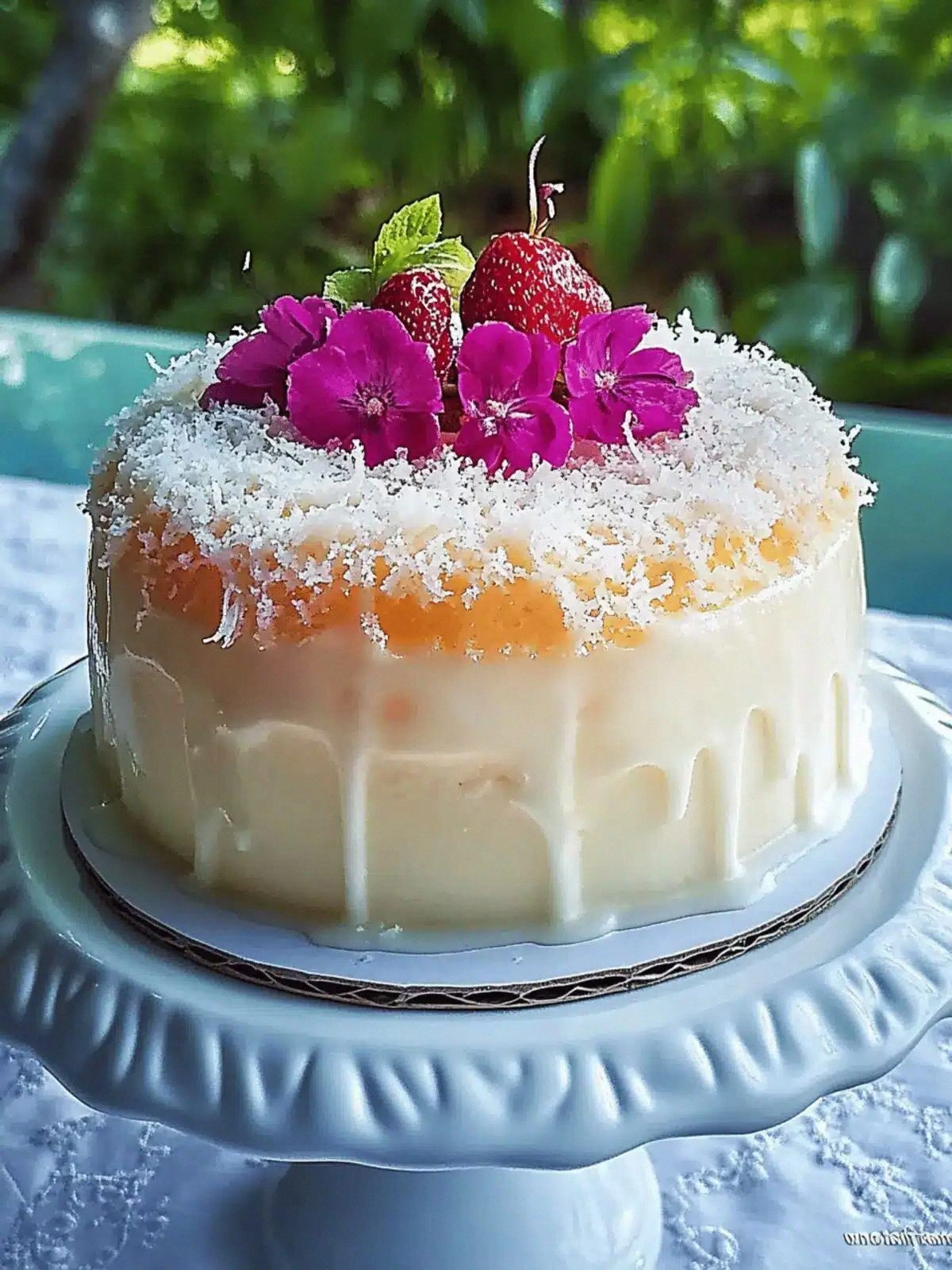
- Once cooled, dust the top with additional shredded coconut for a decorative finish. The extra coconut adds a subtle crunch that contrasts with the moist crumb. It also enhances the tropical aesthetic. Serve immediately or store for later enjoyment.
That's it — you did it. But hold on, I've got a few more tricks that'll take this to another level…
Insider Tricks for Flawless Results
The Temperature Rule Nobody Follows
Many bakers think the oven temperature is a set-and-forget number, but the reality is that oven temperatures can vary by up to 25°F. I’ve found that preheating for 15 minutes and then placing the cake in a preheated oven at 350°F gives a consistent rise. If your oven runs hot, lower the temperature by 10°F; if it runs cool, increase by 10°F. A calibrated oven thermometer is your best friend for accurate results.
Why Your Nose Knows Best
Before you even touch the batter, inhale the aroma of the sweetened condensed milk and coconut milk. The scent is a cue that the mixture is balanced; if it smells too “milk-y” or too “sweet,” you may need to adjust the ratios. Your nose is a reliable indicator of when the batter is ready to bake, preventing under- or over-baking.
The 5-Minute Rest That Changes Everything
After whisking the dry ingredients into the batter, let the mixture rest for 5 minutes. This brief pause allows the flour to hydrate fully, resulting in a more tender crumb. It also helps the coconut to release its oils, enriching the overall flavor. Skipping this step often leads to a denser cake.
Keep It Moist, Not Wet
Some bakers add extra liquid to make the batter runny, but this can lead to a soggy cake. Instead, focus on the ratio of wet to dry ingredients. The sweetened condensed milk and coconut milk provide enough moisture, so avoid adding extra water or milk. If you find the batter too thick, simply stir in a splash of whole milk.
Watch the Edges
During baking, the edges of the cake should start pulling away from the pan. This is a sign that the cake is baking evenly. If the edges are browning too quickly, tent the cake with foil to prevent burning. Conversely, if the edges remain pale, increase the oven temperature slightly.
Serve With a Twist
To elevate the flavor, drizzle a thin layer of toasted coconut butter on top of the cooled cake. This adds a nutty, caramelized finish that pairs beautifully with the coconut flavor. Alternatively, a dusting of powdered sugar creates a sweet finish that is both classic and elegant.
Creative Twists and Variations
This recipe is a playground. Here are some of my favorite ways to switch things up:
Almond Coconut Bliss
Replace half of the shredded coconut with finely chopped toasted almonds for a nutty crunch. The almond flavor pairs wonderfully with the coconut, creating a complex profile. This variation is perfect for those who love a bit of extra texture.
Chocolate Coconut Explosion
Fold in ½ cup of melted dark chocolate into the batter for a chocolate-coconut fusion. The chocolate adds depth and a bittersweet note that contrasts nicely with the sweetness. Serve with a drizzle of chocolate ganache for an indulgent finish.
Spiced Tropical Delight
Add ½ teaspoon of ground cardamom and a pinch of sea salt to the batter. The cardamom brings warmth, while the salt balances the sweetness. This spicy twist is ideal for a dinner party that needs a unique dessert.
Berry Coconut Fusion
Stir in ½ cup of fresh blueberries or raspberries before baking. The berries add a burst of tartness that cuts through the richness. Once baked, top with a spoonful of whipped cream for a luscious contrast.
Vanilla Bean Infusion
Replace the vanilla extract with a split vanilla bean for a more aromatic experience. The vanilla bean’s seeds add subtle texture and a deeper flavor. This variation is a great way to elevate the classic recipe.
Almond Milk Swap
For a dairy-free version, replace whole milk with almond milk. The nutty undertone of almond milk complements the coconut, creating a light, airy cake. This tweak makes the dessert suitable for lactose-intolerant guests.
Storing and Bringing It Back to Life
Fridge Storage
Store the cooled cake in an airtight container or wrap it tightly with plastic wrap. Keep it in the refrigerator for up to three days. When you’re ready to serve, let it sit at room temperature for 15 minutes to soften the crumb. This method preserves the moisture and prevents the cake from drying out.
Freezer Friendly
Wrap the cake individually in plastic wrap, then place it in a freezer bag. Freeze for up to two months. When you’re ready to enjoy, thaw overnight in the refrigerator. The cake will retain its flavor and texture after freezing.
Best Reheating Method
To reheat, preheat your oven to 325°F (165°C) and place the cake on a baking sheet. Warm for 10-12 minutes, or until the interior feels warm. Add a tiny splash of water before reheating to steam the cake back to perfection, keeping it moist and fragrant.