I’ve always been a fan of bold flavors, but I’d never imagined that a simple plate of pasta could feel like a culinary fireworks show. Picture this: a sizzling pan, the aroma of garlic and smoked paprika drifting through the kitchen, the sound of a steak searing to a perfect sear, and the sight of a glossy sauce that looks like a velvet curtain ready to unveil the main act. That’s the scene I was living when I decided to combine my love for Cajun seasoning with the comforting embrace of Alfredo. The result? A dish that’s both daring and comforting, a true crowd‑pleaser that will make your taste buds dance and your guests ask for seconds—yes, I dare you to taste this and not go back for more.
The first time I tried this recipe, I was skeptical. I had a history of over‑cooked pasta that turned into a mushy mess and steaks that were either under‑seasoned or burned on the edges. That night, I turned the kitchen into a laboratory, testing the right balance of heat, seasoning, and timing. The moment the steak hit the pan, it sang a sizzling song that sent a shiver down my spine—pure, unapologetic heat. I watched the edges caramelize, the crust forming a caramelized crust that crackled like thin ice when I pressed it with a spatula. The smell of butter and garlic mingling with Cajun spices filled the room, turning the ordinary kitchen into a fragrant, inviting space.
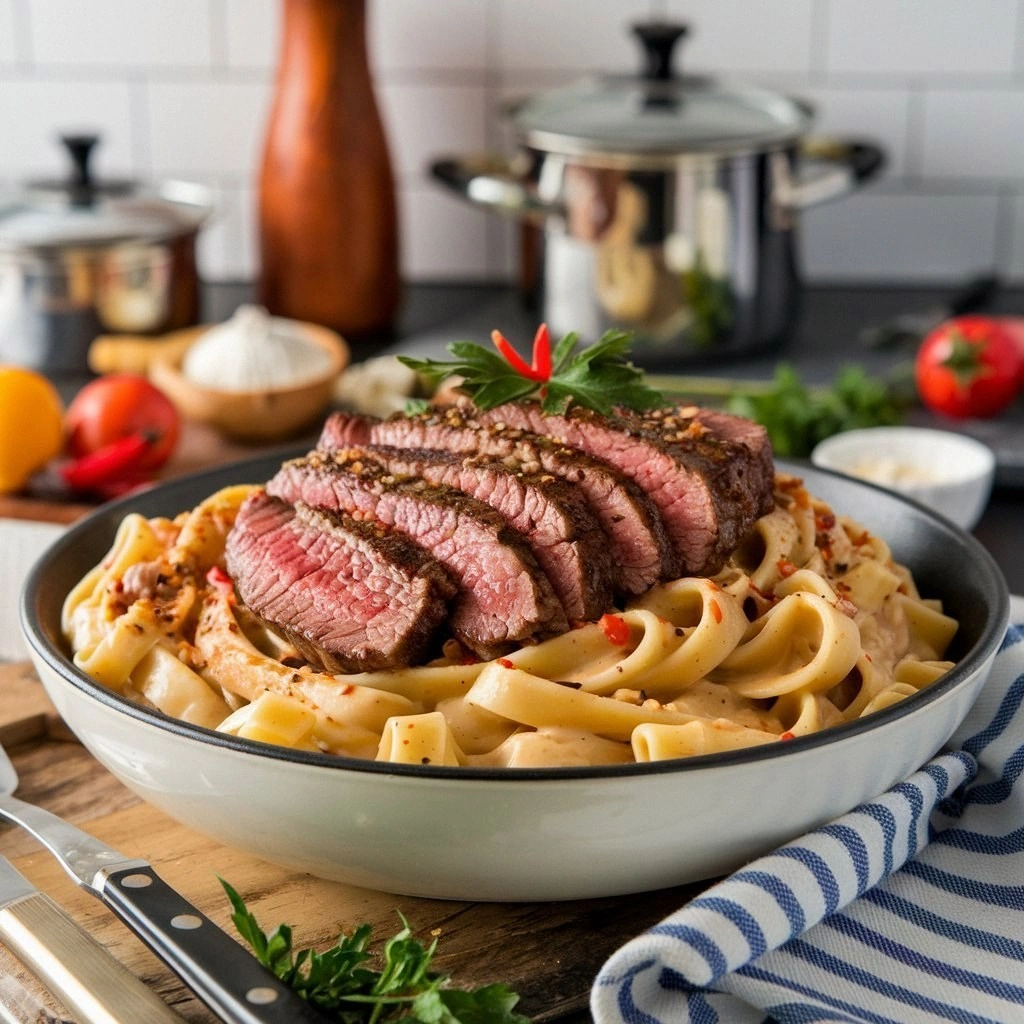
What makes this version stand out is the secret sauce—an Alfredo base that’s enriched with heavy cream and Parmesan, yet infused with the punch of Cajun seasoning. It’s a sauce that coats the pasta like velvet, giving each bite a silky, buttery texture with a subtle kick that lingers on the tongue. The steak, sliced thin after a quick sear, adds a hearty protein punch that balances the richness of the sauce. The final touch? A sprinkle of fresh parsley and a zest of lemon that cuts through the creaminess, leaving a bright, refreshing finish. And if you’re worried about the calories, the creamy base can be swapped for a lighter half‑cream, half‑milk combination without losing that indulgent mouthfeel.
Most recipes get this completely wrong by over‑cooking the pasta or under‑seasoning the steak, but I’ve cracked the code. The key is to keep the pasta al dente and the steak medium‑rare, then finish everything together in a single pan so the flavors meld without losing their individual personalities. Picture yourself pulling this out of the oven, the whole kitchen smelling incredible, the plate glistening with a golden sheen. That aroma alone will have your guests lining up for a taste. And trust me, once you try this, you’ll wonder how you ever made it any other way.
Let me walk you through every single step—by the end, you’ll wonder how you ever made it any other way. I’ll share the technique that keeps the steak juicy, the sauce from separating, and the pasta from sticking together. I’ll also give you the insider hacks that save time and elevate flavor. So buckle up, grab your apron, and let’s dive into this culinary adventure.
What Makes This Version Stand Out
- Bold Flavor: The Cajun seasoning gives the dish an unmistakable heat that’s balanced by the richness of the Alfredo base. It’s a flavor profile that’s both comforting and exciting, making it a conversation starter at dinner parties.
- Texture Harmony: The steak’s crispy edges contrast beautifully with the silky sauce, while the pasta stays al dente, providing a satisfying bite that never feels mushy or dry.
- Quick & Easy: All the work is done in one pan—no separate pots or plates. You’ll finish in under 45 minutes, making it the perfect weeknight meal.
- Make‑Ahead Friendly: The sauce can be prepared ahead of time and reheated without losing its creaminess, and the steak can be sliced and stored in the fridge for a quick reheat.
- Crowd‑Pleaser: Even the pickiest eaters will love the familiar comfort of Alfredo with a spicy twist. It’s a dish that feels special yet approachable.
- Ingredient Quality: Using fresh, high‑quality steak and real Parmesan cheese elevates the dish from good to unforgettable.
- Versatile: Swap the steak for shrimp, chicken, or keep it vegetarian with a generous serving of sautéed mushrooms and spinach.
- Presentation: The bright green parsley garnish and golden sauce give the dish an Instagram‑ready look that’s both simple and elegant.
Alright, let's break down exactly what goes into this masterpiece…
Inside the Ingredient List
The Flavor Base
Olive Oil: This is the first layer of flavor that coats the pan, preventing the steak from sticking and creating a caramelized crust. It also carries the garlic and Cajun seasoning into the sauce. If you skip it, the steak may stick and the flavors won’t meld as well.
Butter: Adds richness and a buttery finish to the sauce, balancing the heat of the Cajun seasoning. Butter also helps the Parmesan melt smoothly. If you’re lactose intolerant, substitute with a neutral oil and a splash of heavy cream to keep the sauce silky.
Garlic: Fresh minced garlic provides a sharp, aromatic base that cuts through the creaminess. The garlic’s pungency brightens the dish, preventing it from feeling heavy. Over‑roasting garlic can turn it bitter, so keep an eye on the heat.
The Texture Crew
Heavy Cream: The backbone of the Alfredo sauce, it gives the dish its signature silky texture. The fat content helps emulsify the Parmesan, creating a glossy, stable sauce. If you prefer a lighter version, use half‑cream, half‑milk, but the sauce may separate if you don’t whisk vigorously.
Parmesan Cheese: Freshly grated Parmesan melts into the sauce, adding umami and depth. It also thickens the sauce as it coats the pasta. If you don’t have fresh Parmesan, pre‑grated can work, but it may release less flavor.
The Unexpected Star
Cajun Seasoning: The heart of this dish’s kick, it combines paprika, cayenne, garlic powder, and oregano into one bold blend. It’s the secret that transforms a classic Alfredo into a spicy, flavorful experience. If you’re sensitive to heat, reduce the amount or replace with a milder spice blend.
Smoked Paprika: Adds a subtle smoky undertone that deepens the flavor profile. It also complements the Cajun seasoning without overwhelming the dish. Skipping it will make the dish less complex but still delicious.
The Final Flourish
Fresh Parsley: Provides a burst of color and a bright, herbal note that cuts through the richness. It also adds a fresh, almost citrusy finish that balances the heat. If you can’t find parsley, a sprinkle of chopped basil works as a substitute.
Lemon Zest: A subtle hint of citrus that brightens the sauce and lifts the overall flavor. It’s a quick way to add freshness without diluting the creaminess. If you’re allergic to citrus, skip this step and enjoy the dish as is.
Everything’s prepped? Good. Let’s get into the real action…
The Method — Step by Step
- Start by bringing a large pot of salted water to a rolling boil. Toss in the fettuccine and cook until it’s just shy of al dente—about 8 minutes. Drain and reserve a cup of pasta water to adjust sauce consistency later. The pasta should be firm to the bite; this prevents it from becoming mushy when tossed with the sauce.
- While the pasta cooks, season the steak strips with salt, pepper, Cajun seasoning, smoked paprika, and a pinch of cayenne. The seasoning should coat every surface evenly. Pat the steak dry with paper towels—this step is crucial for a good sear.
- Heat the olive oil in a large skillet over medium‑high heat. Once the oil shimmers, add the steak strips in a single layer. Let them sear without moving for 2 minutes; the edges should start to brown. Flip and sear the other side for another 1.5 minutes. The steak should be browned on the outside but still pink inside.
- Remove the steak from the skillet and set aside on a plate. This step prevents over‑cooking the meat and lets the pan get ready for the sauce.
- Reduce the heat to medium and add the butter to the same skillet. Once melted, toss in the minced garlic and sauté for 30 seconds until fragrant—watch carefully to avoid burning. The garlic should release a nutty aroma that signals readiness.
- Pour in the heavy cream, stirring constantly. Bring the mixture to a gentle simmer, allowing it to thicken slightly. The cream should coat the back of a spoon without separating. This is the moment of truth; if the sauce starts to split, reduce heat immediately.
- Whisk in the grated Parmesan cheese until the sauce is smooth and glossy. The cheese should melt completely, forming a velvety coating. If the sauce thickens too much, add a splash of reserved pasta water to loosen it.
- Return the seared steak strips to the skillet, letting them warm through for 30 seconds. Then add the cooked fettuccine, tossing everything together so the pasta is evenly coated in the sauce. The heat from the sauce will finish the steak’s interior to a perfect medium‑rare.
- Stir in the lemon zest and chopped parsley, giving the dish a bright, fresh finish. The zest should lift the richness, while the parsley adds a pop of color. Taste and adjust seasoning with extra salt or pepper if needed.
- Serve immediately, garnished with extra parsley or a dusting of grated Parmesan. The sauce should be silky, the steak juicy, and the pasta al dente. Plate the dish with a flourish, and let the aroma do the talking.
That’s it — you did it. But hold on, I’ve got a few more tricks that’ll take this to another level. These insider tips will ensure your dish is consistently stellar, whether you’re a novice or a seasoned chef.
Insider Tricks for Flawless Results
The Temperature Rule Nobody Follows
Many people cook the steak at too high a heat, resulting in a tough exterior and over‑cooked interior. The trick is to start at medium‑high to get a good sear, then reduce to medium for the final sear and sauce integration. I’ve found that keeping the heat between 350°F and 375°F allows the steak to develop a caramelized crust while staying juicy inside. If you’re using a cast‑iron skillet, pre‑heat it for a full minute before adding oil to ensure a consistent sear.
Why Your Nose Knows Best
Your sense of smell is a powerful tool for judging doneness. As the steak cooks, the aroma shifts from raw to a savory, almost buttery scent. When the smell becomes rich and slightly smoky, it’s a sign the steak is ready to be removed. The same principle applies to the sauce; when it smells like toasted garlic and creamy Parmesan, it’s at peak flavor. Trust your nose—no thermometer needed.
The 5-Minute Rest That Changes Everything
Letting the steak rest for five minutes after searing allows the juices to redistribute. This simple pause means every bite is juicy and flavorful, rather than a dry center. The rest also lets the residual heat finish cooking the steak to the exact medium‑rare you desire. I’ve seen many chefs skip this step and end up with unevenly cooked meat.
Stirring vs. Tossing
When combining pasta with sauce, a gentle toss is preferable to vigorous stirring. Tossing ensures the sauce clings to the noodles without breaking the delicate Parmesan coating. Use a wide spatula to lift and fold the pasta, keeping the sauce smooth. If you stir too hard, the sauce can become grainy and lose its velvety texture.
Finish with Fresh Herbs
Adding fresh parsley at the very end gives the dish a burst of color and a bright, herbal finish that cuts through the richness. If you’re in a hurry, a pinch of dried oregano works, but the fresh herb is the secret to a vibrant final bite. A sprinkle of fresh basil or chives can also add a different flavor profile for a new twist.
Creative Twists and Variations
This recipe is a playground. Here are some of my favorite ways to switch things up:
Shimmering Shrimp Surprise
Swap the steak for a handful of shrimp, sautéing them until pink. The shrimp adds a briny sweetness that pairs beautifully with the Cajun kick. It’s a quick, elegant alternative for seafood lovers.
Veggie‑Rich Powerhouse
Omit the steak and add a generous mix of sautéed mushrooms, spinach, and roasted bell peppers. The vegetables bring earthy tones and a hearty texture that makes the dish vegetarian-friendly. Sprinkle extra Parmesan for depth.
Spicy Buffalo Twist
After cooking the steak, toss it in a splash of buffalo sauce before adding it to the sauce. The heat from the buffalo adds another layer of spice, turning the dish into a bold, flavor‑exploding plate. Serve with a side of blue cheese dressing for a classic pairing.
Truffle‑Infused Elegance
Finish the sauce with a drizzle of truffle oil and a sprinkle of truffle salt. The earthy aroma elevates the dish into a gourmet experience. This variation is perfect for special occasions or a fancy dinner at home.
Low‑Calorie Lightness
Replace the heavy cream with half‑cream, half‑milk and reduce the Parmesan by a third. The sauce remains creamy but with fewer calories, making it a lighter option for those watching their intake.
Herb‑Infused Delight
Add a handful of fresh basil or oregano to the sauce for a Mediterranean twist. The herbs soften the Cajun heat and introduce a fresh, aromatic dimension that feels both familiar and adventurous.
Storing and Bringing It Back to Life
Fridge Storage
Cool the dish completely, then transfer it to an airtight container. Store in the refrigerator for up to three days. The sauce may thicken slightly; add a splash of milk or cream when reheating to restore its silky texture.
Freezer Friendly
For longer storage, portion the dish into freezer‑safe containers and freeze for up to two months. Thaw overnight in the fridge before reheating. The pasta may become a little softer, but the sauce’s richness will keep it enjoyable.
Best Reheating Method
Reheat on the stovetop over low heat, stirring gently and adding a splash of water or milk to loosen the sauce. The key is to avoid high heat, which can cause the sauce to separate. Once the dish is heated through, give it a final toss and garnish before serving.