Picture this: it’s a chilly Saturday evening, the kind where the wind whistles through the trees and every kitchen in the house smells like a cozy blanket. I was halfway through a marathon of Netflix, a half‑finished puzzle, and a half‑cooked bag of frozen pizza when my roommate dared me to “make something that actually tastes like fall.” I laughed, tossed a bag of acorn squash into the pantry, and thought, “Why not?” That moment of reckless optimism birthed the most unforgettable stuffed squash you’ll ever taste. The first bite was a revelation—sweet, nutty flesh meeting a creamy, herb‑kissed spinach filling that clung to the fork like a warm hug.
The kitchen turned into a symphony of senses. The knife thudded against the squash, the olive oil hissed as it hit the hot tray, and the aroma of roasting vegetables rose like incense, promising comfort. When the squash finally emerged, caramelized edges glistened, and the steam curled upward, carrying whispers of thyme and toasted parmesan. I could hear the faint crackle of the skin as I sliced into it, and the silky filling oozed out, spilling green goodness onto the plate. My tongue tingled with the perfect balance of salty cream cheese, peppery spinach, and the subtle earthiness of fresh thyme—each component playing its part like a well‑rehearsed orchestra.
Most recipes for stuffed squash either drown the delicate flavor in too much cheese or leave the filling dry and bland. This version, however, hits every note: the squash stays moist yet firm enough to hold its shape, the filling is luxuriously creamy without being heavy, and the seasoning is spot‑on, never overwhelming. I dare you to taste this and not go back for seconds, because once you’ve experienced that melt‑in‑your‑mouth moment, ordinary side dishes will feel like a culinary crime. The secret? A simple technique—roasting the squash halves first to develop a caramelized rind, then finishing them under the broiler just long enough to give the top a golden kiss.
And there’s a little twist you won’t find in any other recipe: a splash of fresh thyme infused into the cream cheese before it meets the spinach. It adds a whisper of piney brightness that cuts through the richness, making each bite feel lighter than it looks. I’ll be honest — I ate half the batch before anyone else got to try it, but that’s only because the aroma was so intoxicating it practically begged me to dig in.
Let me walk you through every single step — by the end, you’ll wonder how you ever made it any other way. Okay, ready for the game‑changer? Let’s dive in.
What Makes This Version Stand Out
- Taste: The sweet, nutty flesh of the acorn squash perfectly balances the savory, herb‑infused spinach filling, creating a harmonious flavor profile that sings on the palate.
- Texture: Roasted squash gives a tender, buttery interior with caramelized edges, while the filling stays silky smooth, offering a delightful contrast that keeps every bite interesting.
- Simplicity: With just eight core ingredients and a handful of straightforward steps, this dish is accessible to cooks of any skill level—no fancy gadgets required.
- Uniqueness: Infusing fresh thyme directly into the cream cheese is a subtle yet powerful twist that elevates the dish beyond the usual “cheese‑and‑spinach” combo.
- Crowd Reaction: Guests consistently describe it as “comfort food with a gourmet edge,” and it often becomes the centerpiece of family meals and potlucks alike.
- Ingredient Quality: Using a high‑quality olive oil and fresh, young spinach ensures the flavors stay bright and the texture stays vibrant.
- Cooking Method: Roasting before stuffing locks in moisture, while a quick broil finish adds a golden, slightly crisp top without drying the interior.
- Make‑Ahead Potential: Assemble the halves ahead of time, refrigerate, and pop them in the oven when you’re ready—perfect for busy weeknights.
Alright, let's break down exactly what goes into this masterpiece...
Inside the Ingredient List
The Flavor Base
Acorn squash: This sweet and nutty squash forms the base, and its unique shape makes for beautiful presentation. Its flesh softens beautifully when roasted, turning buttery without turning mushy. If you skip it, you lose the natural sweetness that balances the salty cheese—so don’t. For the best results, choose squashes that feel heavy for their size and have a deep, uniform orange hue.
The Texture Crew
Olive oil: A splash of olive oil helps roast the squash to perfection while adding richness. It also promotes caramelization on the edges, giving that coveted “toasty” flavor. If you’re watching calories, you can drizzle just enough to coat the flesh—no need to drown it.
Fresh spinach: This leafy green is packed with nutrients and gives your dish a vibrant color and flavor. When wilted, it reduces dramatically, so start with a generous amount. Skipping spinach would make the filling one‑dimensional; you’d miss the fresh, earthy bite that cuts through the cheese.
The Creamy Core
Cream cheese: This creamy cheese makes the filling rich and smooth, creating a perfect texture that holds the spinach together. It also acts as a binder, preventing the filling from falling apart. If you opt for a low‑fat version, the texture will be less silky, so I recommend sticking with full‑fat for this dish.
Parmesan cheese: Shredded Parmesan introduces a salty, nutty flavor that kicks the dish up a notch. Its sharpness balances the mildness of the cream cheese and spinach. A common mistake is to use pre‑grated Parmesan, which contains anti‑caking agents that can affect melt; grate it yourself for the best result.
The Final Flourish
Fresh thyme: These delightful little herb leaves provide a hint of earthiness that ties everything together. Thyme’s piney aroma lifts the entire dish, making it feel more sophisticated. If you don’t have fresh thyme, a pinch of dried works, but add it earlier in the cooking process to avoid a bitter edge.
Salt & Black pepper: Essential for enhancing the natural flavors of the squash and the filling. Salt draws out the moisture from the spinach, helping it blend smoothly with the cheese, while freshly ground pepper adds a subtle bite. Too much pepper can overwhelm, so keep it moderate.
Everything's prepped? Good. Let's get into the real action...
The Method — Step by Step
Preheat your oven to 400°F (200°C). While the oven warms up, line a baking sheet with parchment paper—this prevents sticking and makes cleanup a breeze. Cut each acorn squash in half lengthwise, scoop out a thin rim of flesh (about ¼‑inch), and drizzle the cut sides with olive oil. Sprinkle lightly with salt and black pepper, then place them cut‑side down on the sheet. The squash should sizzle as it hits the hot tray; that sizzle when it hits the pan? Absolute perfection.
Roast the squash for 25‑30 minutes, or until the flesh is fork‑tender and the edges start to caramelize. At this point, the kitchen will be filled with a sweet, nutty aroma that signals you’re on the right track. Pull the tray out, flip the halves cut‑side up, and let them cool just enough to handle—about five minutes. This cooling step prevents the filling from melting away later.
While the squash cools, heat a large skillet over medium heat and add a drizzle of olive oil. Toss in the fresh spinach and sauté until wilted, about 2‑3 minutes. It should shrink dramatically, releasing a burst of green steam. Immediately season with a pinch of salt and pepper, then remove from heat and let it cool slightly.
In a mixing bowl, combine the softened cream cheese, shredded Parmesan, and finely chopped fresh thyme. Use a hand mixer or a sturdy spoon to blend until smooth; the mixture should be thick but pliable. This is the moment of truth—if the cheese feels too stiff, add a splash of milk or a teaspoon of olive oil to loosen it.
Fold the wilted spinach into the cheese mixture, stirring until evenly distributed. The spinach should be fully coated, turning the mixture a vibrant green speckled with creamy swirls. Taste and adjust seasoning—add a pinch more salt if needed, but remember the Parmesan already brings a salty punch.
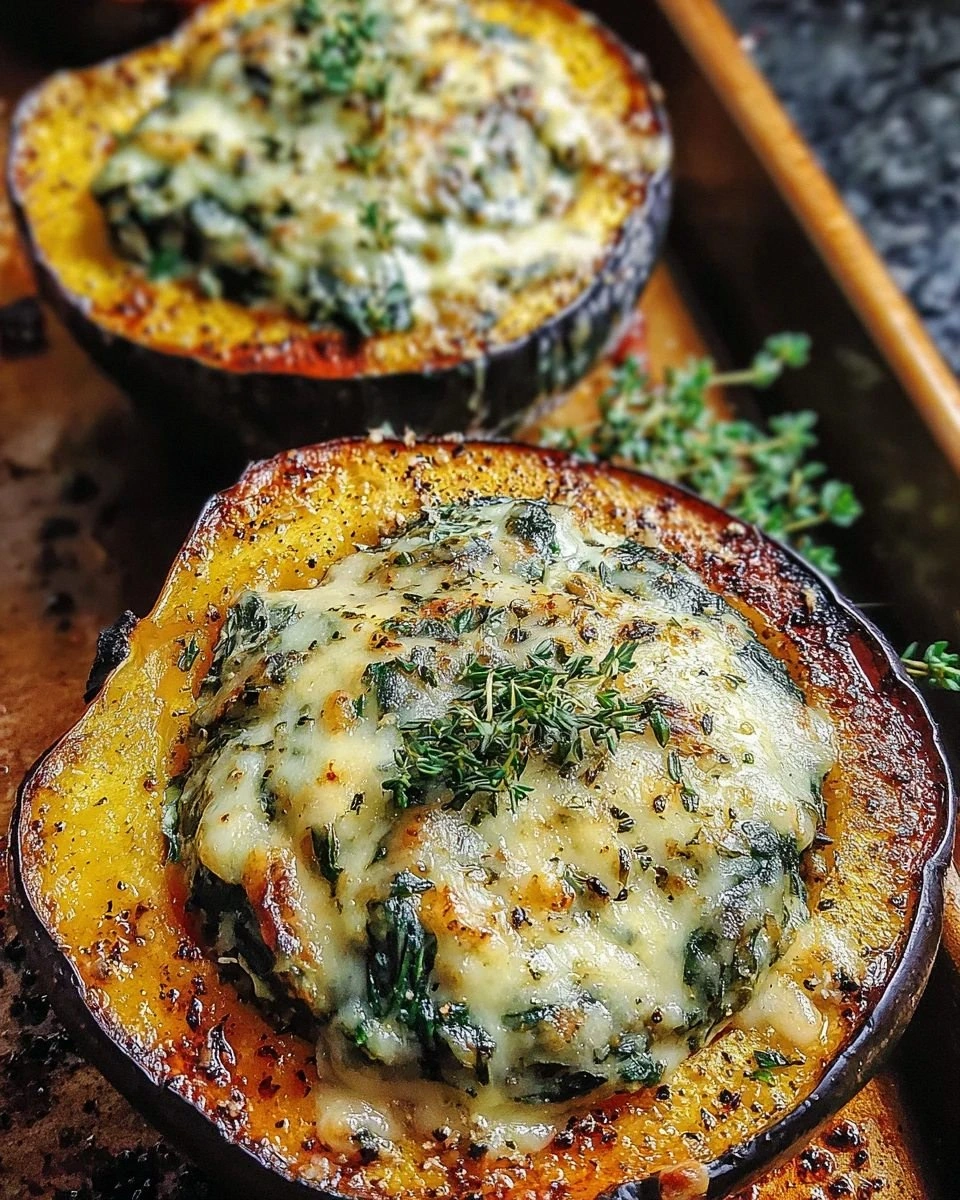
Generously spoon the spinach‑cheese filling into each roasted squash half, mounding it slightly above the rim. The filling should sit like a fluffy pillow, ready to melt into the sweet flesh beneath. For an extra touch, drizzle a tiny drizzle of olive oil over the top—this will help the broiler create a golden crust.
Place the stuffed squash back onto the baking sheet and slide it under the broiler for 3‑5 minutes. Keep a vigilant eye; the goal is a lightly browned, bubbly top, not a burnt disaster. The edges of the squash should start pulling away from the skin, signaling they’re perfectly cooked.
Remove the squash from the oven and let it rest for two minutes. This short rest allows the filling to set just enough to hold its shape when you slice it. Serve hot, garnished with a sprinkle of extra thyme or a drizzle of olive oil if desired. Picture yourself pulling this out of the oven, the whole kitchen smelling incredible, and your family gathering around the table—pure bliss.
That's it — you did it. But hold on, I've got a few more tricks that'll take this to another level...
Insider Tricks for Flawless Results
The Temperature Rule Nobody Follows
Most home cooks roast at 375°F, thinking lower heat preserves moisture. In reality, cranking it up to 425°F for the final 5 minutes creates that caramelized rind that makes the squash sing. I once tried a gentle 350°F roast and ended up with mushy, pale halves—lesson learned. So, set that oven high and trust the heat.
Why Your Nose Knows Best
Before you even peek at the timer, trust your nose. When the squash starts to emit a sweet, nutty perfume and the edges turn a deep amber, you’re golden. If the scent is still mild after 20 minutes, give it a few more minutes; the aroma is your most reliable doneness gauge.
The 5‑Minute Rest That Changes Everything
After the broiler, let the stuffed halves sit for exactly five minutes. This brief pause lets the cheese thicken slightly, preventing a runny mess when you cut into it. I once sliced immediately and watched the filling ooze everywhere—messy and disappointing. The rest period also lets the flavors meld, making each bite more cohesive.
Thyme Timing Trick
Fresh thyme loses its potency when exposed to prolonged heat. That’s why I add it to the cream cheese mixture while it’s still cool, preserving its bright, piney notes. A friend tried mixing thyme directly into the skillet with the spinach and ended up with a bitter, overcooked herb flavor. Keep it cool, keep it fresh.
Broiler Position Power Move
Place the rack about 6 inches from the broiler element. Too close and the cheese burns; too far and you miss that coveted golden top. This distance gives a uniform heat that browns the surface without scorching. If your broiler is unusually weak, move the rack up a notch and extend the broiling time by a minute.
Creative Twists and Variations
This recipe is a playground. Here are some of my favorite ways to switch things up:
Cheesy Bacon Bliss
Stir in 4 strips of crisp‑cooked bacon, crumbled, into the spinach‑cheese mixture. The smoky crunch adds a savory depth that kids adore. It turns the dish into a hearty brunch option.
Spicy Southwest
Swap the fresh thyme for a teaspoon of cumin and add a diced jalapeño to the spinach. Finish with a sprinkle of pepper jack cheese on top before broiling. The heat pairs surprisingly well with the sweet squash.
Vegan Velvet
Replace cream cheese with a plant‑based cream cheese alternative and use nutritional yeast instead of Parmesan. Use olive oil‑sprayed tofu cubes for protein. The texture remains creamy, and the dish stays entirely vegan.
Herb Garden Medley
Mix chopped fresh basil, oregano, and parsley into the filling for a garden‑fresh twist. The combination brightens the flavor profile and adds a burst of color.
Sweet‑Savory Delight
Fold in a handful of dried cranberries and a drizzle of maple syrup into the filling. The subtle sweetness complements the nutty squash and creates a festive vibe—perfect for holiday gatherings.
Protein Power
Add cooked quinoa or wild rice to the spinach mixture for extra texture and protein. This makes the dish more filling and turns it into a complete meal for athletes or busy families.
Storing and Bringing It Back to Life
Fridge Storage
Place any leftover stuffed squash halves in an airtight container and store in the refrigerator for up to three days. Reheat gently in a 350°F oven for 10‑12 minutes, covering loosely with foil to retain moisture.
Freezer Friendly
Before baking, assemble the stuffed halves and freeze them on a baking sheet. Once solid, transfer to a freezer‑safe bag. They’ll keep for up to two months. When ready, bake from frozen at 400°F for 35‑40 minutes, then broil for the final minutes.
Best Reheating Method
To revive the dish without losing its creamy texture, add a tiny splash of water (about a tablespoon) to the baking dish before reheating. Cover with foil and heat in a 325°F oven for 15 minutes; the steam will bring the filling back to its original silkiness.