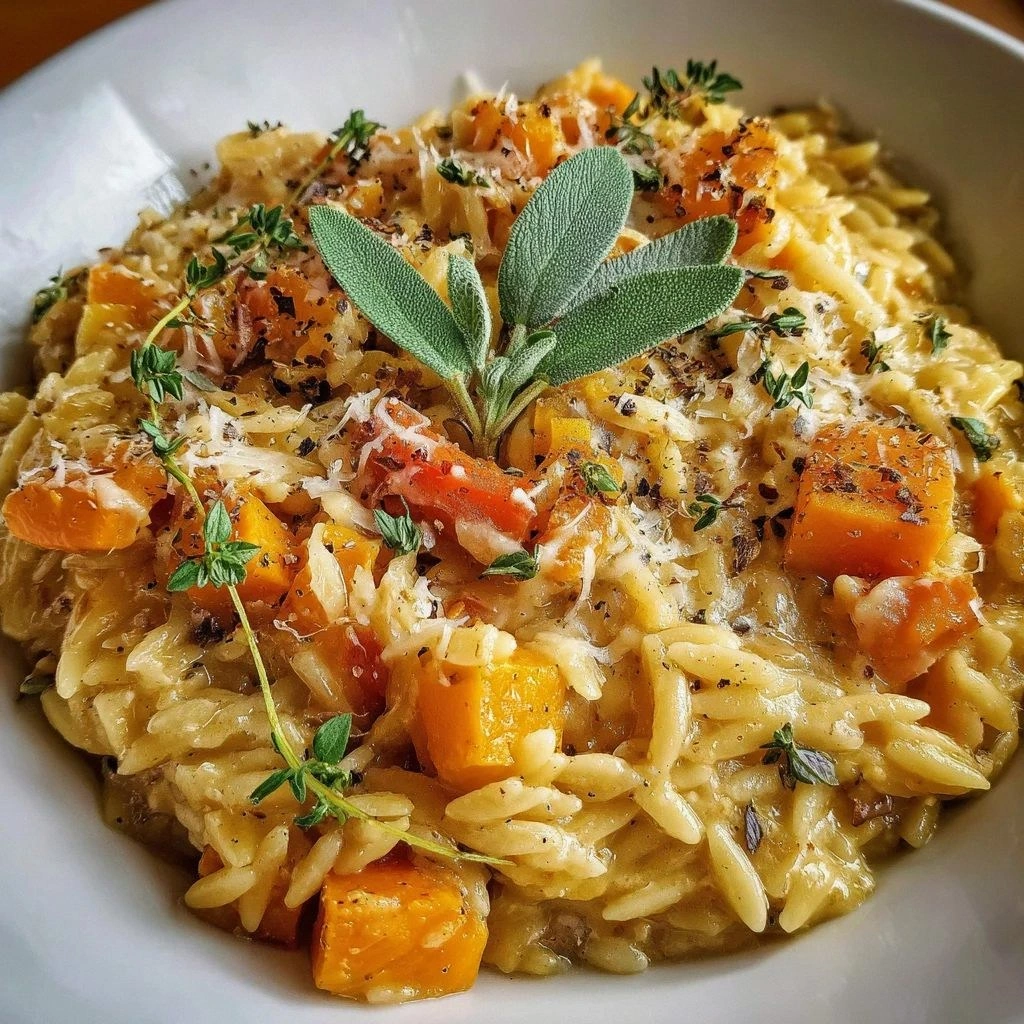
Last Tuesday I walked into my kitchen with a single mission: rescue the lonely butternut squash that had been rolling around my counter for a week and turn it into something so outrageously comforting I’d forget the world was a dumpster fire. Thirty-seven minutes later I was standing over the stove, wooden spoon in hand, cackling like a cartoon villain because the sauce I’d just created was coating the orzo like liquid velvet and the smell—oh, the smell—was equal parts autumn candle and classy trattoria. I burned my tongue on the first sneaky taste (worth it), promptly declared this the apex of cold-weather carbs, and texted three friends the same dare: “I triple-dog-guarantee you can’t make this without going back for thirds.” Two of them did, one sent a photo of the empty pot, and I finally wrote the darn recipe down before my notes app got buried under grocery lists and half-baked haikus about cheese.
Picture this: tiny rice-shaped pasta swimming in a sunset-orange purée that tastes like someone hugged your taste buds while wearing a cashmere sweater. The squash melts into the broth until the line between vegetable and sauce disappears, mozzarella goes full lava-lamp, and Parmesan sneaks in with a salty punch that makes you close your eyes involuntarily. Crispy sage leaves shatter like thin ice against the roof of your mouth, releasing an earthy perfume that makes you wonder why you ever tolerated basic basil. It is, in short, the edible equivalent of binge-watching your favorite sitcom under a weighted blanket while rain taps the windows—only it’s done in under an hour and doesn’t require a Netflix subscription.
Most recipes get this dish wrong by treating butternut squash like a polite guest instead of the rowdy life-of-the-party it secretly wants to be. They under-roast, under-season, or—heaven forbid—boil the squash into watery oblivion, ending up with a pallid gruel that tastes like disappointment and kindergarten paste. I’m here to stage an intervention: we’re going to char the edges until they caramelize into candy-like nuggets, bloom warm spices in olive oil until your kitchen smells like a Moroccan souk, and finish with a cream-and-cheese waterfall so molten it could star in its own slow-motion music video. If you’ve ever struggled with gluey pasta, bland squash, or cheese that clumps like wet sand, you’re not alone—and I’ve got the fool-proof fix.
Stay with me here—this is worth it. By the time you pull your skillet from the oven and hear that first sizzling sigh as cheese meets squash, you’ll understand why I unapologetically ate half the batch standing up, leaning against the counter, swatting away anyone who dared come within fork-length. Let me walk you through every single step—by the end, you’ll wonder how you ever made it any other way.
What Makes This Version Stand Out
Roast-First Magic: Instead of simmering raw squash into mushy anonymity, we blast it at high heat until the edges blister and sweeten like toasted marshmallows. That deep caramel note anchors the whole dish and saves you from the watery baby-food trap lesser recipes fall into.
Two-Cheese Melt System: Mozzarella brings the Instagram-worthy cheese-pull, while aged Parmesan delivers umami punches that keep each bite interesting. Using both means you get creamy cohesion plus sharp, salty sparks—no one-note richness allowed.
Warm Spice Whisper: A pinch of cinnamon, allspice, and cloves amplifies the squash’s natural sweetness without screaming “dessert.” Think of them as the culinary equivalent of dimmer switches—they lift flavor without overwhelming.
One-Pan Coziness: After roasting, everything happens in the same oven-safe skillet, so the orzo drinks up all those bronzed, stuck-on bits of squash—free fond equals free flavor, and nobody wants extra dishes on a weeknight.
Restaurant-Level Texture: By finishing the pasta in the oven, the top forms a lacy, golden crust while the interior stays saucy. You get a built-in gratin effect without any bread-crumb gymnastics.
Make-Ahead Hero: Assemble up to the final bake, park it in the fridge, then slide it into a pre-heated oven when guests arrive. It emerges bubbling and fragrant like you just slaved away, while your secret is that you binge-watched a sitcom instead.
Universal Crowd Magnet: Vegetarians love the hearty squash, kids devour anything with cheese pulls, and carnivores don’t notice the absence of meat because the dish eats like mac-and-cheese’s sophisticated older cousin who studied abroad.
Alright, let’s break down exactly what goes into this masterpiece...
Inside the Ingredient List
The Flavor Base
Butternut squash is the undisputed star, bringing natural sweetness that intensifies into maple-like richness once roasted. Skip the boil-and-mash routine—high-heat roasting converts starches to sugars and leaves you with bronzed edges that taste like candy. When selecting, look for matte, mottled skin and a hefty heft; shiny skin signals underripe squash that never reaches full sweetness. If you absolutely must substitute, sweet potato works, but you’ll lose that silky, almost nut-butter mouthfeel that makes the dish so comforting.
Vegetable broth is the unsung hero, quietly infusing orzo with layers of flavor water could never dream of. I keep low-sodium cartons in my pantry like they’re canned air; you can always add salt, but you can’t subtract it once the orzo has guzzled it up. Warm the broth in the microwave or a kettle before adding—cold liquid shocks the pasta and extends cooking time, and nobody’s got patience for that on a Tuesday.
Garlic and sweet onion form the aromatic backbone. Garlic hits first with that nose-twitching pungency, while sweet onion melts into jammy threads that disappear into the sauce. Dice them small so they surrender quickly and don’t stage a crunchy rebellion against the tender orzo.
The Texture Crew
Orzo pasta is deceptively tiny but drinks up sauce like a sponge, so timing matters. Buy good-quality bronze-cut if you can; the rough surface grabs flavor better than the slick, Teflon-y supermarket stuff. Under-cook it slightly before the oven finish—think just past chalky—and it will emerge al dente, not preschool paste.
A splash of heavy cream coats starch molecules, giving the sauce that half-set, lava-like flow. You can swap half-and-half if you must, but please, I beg you, don’t reach for skim milk; you’ll end up with a watery gruel that tastes like regret and broken promises.
The Unexpected Star
Fresh sage leaves look fussy but fry in seconds, turning into translucent, mahogany chips that crackle between teeth. Their musty, pine-like aroma is autumn in edible form, and they’re the reason people take a bite, pause, and ask “what is that amazing flavor?” Dried sage is a different herb entirely—skip it here.
Allspice, cinnamon, and cloves sound like pumpkin-spice overkill until you realize we’re using mere pinches. These warming spices amplify the squash’s sweetness the way a frame highlights a painting: they draw out depth without drawing attention to themselves. Ignore them and the dish tastes flat, like a joke without a punchline.
The Final Flourish
Mozzarella and Parmesan tag-team for ooey-gooey greatness. Low-moisture mozzarella melts into stretchy strands, while aged Parmesan supplies crystalline crunch and salty funk. Buy blocks and shred yourself; pre-shredded cellulose-coated cheese resists melting and leaves you with rubbery pellets. And for the love of all things dairy, never buy the powdered stuff in the green can; your taste buds deserve better.
Everything’s prepped? Good. Let’s get into the real action...
The Method — Step by Step
- Crank your oven to 425 °F (220 °C) and slide a sturdy rimmed baking sheet in to pre-heat. A screaming-hot surface jump-starts caramelization, so the squash doesn’t steam into baby food. While it heats, cube your squash into half-inch pieces—small enough to roast quickly, large enough to stay meaty. Toss them with two tablespoons olive oil, a generous pinch of salt, and a few cracks of black pepper until every cube glistens like it’s headed to a nightclub.
- When the oven beeps, tumble the squash onto the hot sheet in a single layer; it should sizzle on contact, the sound of flavor being born. Roast for 20 minutes, flipping once at the halfway mark, until the edges blister and the undersides sport mahogany freckles. Your kitchen will start to smell like candied nuts and autumn campfires—resist the urge to snack; you need every cube for maximum sauce power.
- Meanwhile, heat a large, oven-safe skillet over medium flame. Add the remaining tablespoon of oil, then the diced onion. Stir until it turns translucent and its edges blush golden, about five minutes. Add minced garlic, allspice, cinnamon, and cloves; cook just until the garlic perfumes the air and the spices smell toasted—around 45 seconds. Don’t wander off; garlic goes from nutty to nasty faster than you can say “bitter.”
- Pour in the warm vegetable broth and bring to a lively simmer. Stir in the orzo, reduce heat to low, and cover. Let it burble away for eight minutes, stirring once to prevent clingy pasta, until most of the liquid is absorbed but the pasta is still chalky in the center. Think of it as par-boiling; the oven will finish the job and prevent mush.
- Fold in the roasted squash, scraping up any caramelized bits stuck to the pan—those are pure flavor nuggets. Reduce heat to its lowest setting and stir in the cream, half the mozzarella, and half the Parmesan. The cheese should melt into stretchy ribbons that bind everything together like edible glue. Taste and season boldly with salt and pepper; under-seasoning now means blandness later.
- Scatter the remaining cheeses across the surface like a cheesy snowfall. Arrange sage leaves on top; they’ll crisp and infuse the dish as it bakes. Slide the skillet, uncovered, into the still-hot oven for 12-15 minutes, until the cheese blisters and the edges bubble like a jacuzzi for carbs. That sizzle when it hits the oven? Absolute perfection.
- Remove the skillet (oven mitts, please—this is not the moment for heroics) and let it rest five minutes. Yes, five. The sauce will tighten, the cheese will settle, and you won’t scorch your tongue into next week. Garnish with extra Parmesan, a few frizzled sage leaves, and a crack of black pepper so fresh it makes you sneeze.
- Serve directly from the skillet for maximal rustic charm, or spoon into shallow bowls so everyone gets equal parts creamy center and cheesy crust. Provide extra black pepper and maybe chili flakes for the heat-seekers, though it’s phenomenal straight-up. I dare you to taste this and not go back for seconds—spoiler alert: impossible.
That’s it—you did it. But hold on, I’ve got a few more tricks that’ll take this to another level...
Insider Tricks for Flawless Results
The Temperature Rule Nobody Follows
Room-temperature dairy melts seamlessly; cold cheese can seize into rubbery clumps. Pull cream and cheeses from the fridge before you start roasting—ten minutes is enough to take the chill off. If you’re impatient (hi, same), microwave the cream for 15 seconds; lukewarm is the sweet spot. Your future self, fork-deep in molten cheese, will high-five you.
Why Your Nose Knows Best
Toasted spices smell like you’ve cracked open a spice bazaar; raw spices smell like dusty cupboards. Trust your olfactory alarm system: as soon as the garlic-spice mixture releases a warm, nutty aroma, kill the heat. Over-toasting turns those nuanced notes into bitter charcoal; under-toasting leaves them grassy and flat. A friend tried skipping this step once—let’s just say it didn’t end well.
The 5-Minute Rest That Changes Everything
Resting isn’t optional; it’s the difference between a soupy mess and a cohesive, spoon-standing sauce. During those five minutes, starch molecules relax, liquid redistributes, and the surface cheese sets into a glossy lid. Cover with a clean towel if you fear heat loss, but don’t foil it—condensation will steam the crispy crown into sadness.
Crispy Sage 101
Pat sage leaves bone-dry, then brush lightly with oil—too much and they’ll fry greasy, too little and they char. They’re done when they turn translucent and brittle; remove immediately or they’ll keep cooking from residual heat. Bonus: crush a few over the top for sage “dust” that seasons every bite with woodland perfume.
Creative Twists and Variations
This recipe is a playground. Here are some of my favorite ways to switch things up:
Bacon & Smoked Gouda Edition
Fry three strips of thick-cut bacon until crisp, crumble, and fold in with the cheeses. Swap smoked Gouda for mozzarella to double down on campfire vibes. The smoky, salty chunks play off sweet squash like culinary jazz—perfect for those “I need meat” skeptics.
Chipotle-Coconut Vegan Remix
Sub coconut cream for heavy cream, use nutritional yeast in place of Parmesan, and stir in a teaspoon of minced chipotle in adobo for smoky heat. Finish with toasted pepitas for crunch. Carnivore friends devoured this at my last potluck and never asked “where’s the beef?”
Green Goddess Boost
Puree a handful of spinach and parsley with the cream for a verdant swirl that turns the sauce technicolor. Swap sage for basil ribbons and add lemon zest at the end. It tastes like spring crashed your autumn party—in the best way.
Seafood Celebration
Nestle raw shrimp on top for the final six minutes of baking; they’ll poach in the cheesy steam and turn coral-pink. A squeeze of lemon wakes the whole thing up and makes you feel like you’re dining seaside, sweater sleeves rolled, toes buried in sand.
Breakfast Bake
Make the dish as written, then create four wells and crack eggs into them. Return to the oven until whites set but yolks stay runny. Breakfast-for-dinner has never been this sophisticated—or this indulgent.
Storing and Bringing It Back to Life
Fridge Storage
Cool completely, then spoon into airtight glass containers; plastic absorbs cheesy odors like a sponge. It keeps up to four days, though mine has never survived past two because midnight raids are real. Press plastic wrap directly onto the surface to thwart the dreaded crust-forming skin.
Freezer Friendly
Portion into freezer bags, press out excess air, and freeze flat for space-saving bricks. Thaw overnight in the fridge—microwave defrost turns orzo into glue. Texture softens slightly but flavor stays stellar; stir in a handful of fresh mozzarella before reheating for gooey revival.
Best Reheating Method
Oven is king: 350 °F, covered with foil for 15 minutes, then uncovered for 5 to re-crisp. Add a tiny splash of broth before reheating—it steams back to perfection. Microwave works in a pinch; use 60 % power and stop to stir every 30 seconds to prevent cheese explosions on your ceiling.